Incoterms® in Practice
Real world case studies in International Trade Terms
The following case studies illustrate how Incoterms® rules apply in real commercial and legal contexts. Each case examines the obligations, risks, and responsibilities of buyers and sellers under specific delivery terms and highlights the practical consequences of term selection in international trade.
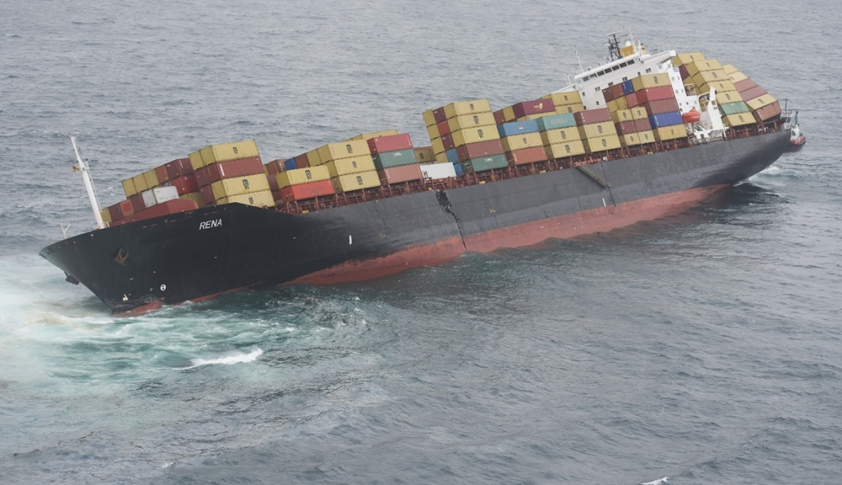
Source: NZ Defence Force
Case study 1 - CFR (C&F)
Phillips Puerto Rico Core, Inc. v. Tradax Petroleum Ltd
Phillips, an importer with offices in Puerto Rico, agreed to buy approximately 25,000 tons of naphtha from Tradax, a corporation doing business in Switzerland. The contract was made under so-called "C&F" terms ("C&F" corresponds to CFR Incoterms®). The naphtha was loaded on the vessel called the Oxy Trader in the port of Skikda, Algeria, which departed for Puerto Rico.
A few days after embarkation the boat was detained by the Coast Guard at Gibraltar. The authorities discovered a latent defect in the Oxy Trader and refused to allow the vessel to proceed. Phillips informed Tradax that the goods would have to be transhipped (transferred to another vessel). Phillips refused to pay under the contract and announced to Tradax that it was "terminating" the contract. Tradax sued in the US Federal Court.
The judge observed that under the rule of Incoterms® a C&F (that is, CFR) seller has two obligations: to deliver the goods to an appropriate carrier with which it has contracted for shipment and to tender proper documents to the buyer. In this case the seller fulfilled these two obligations. Hence, the judge found in favor of Tradax and ordered Phillips to pay for the damages that Tradax had suffered, which amounted to over USD 1 million.
▌Comment
With "C" terms (CFR, CIF, CPT, CIP) the seller is obliged to properly deliver the goods to the carrier in the country of destination but does not bear the risk for any damages incurred during transit. Buyers wishing to place all risks for transport-related damage on the seller should choose one of the "D" terms.
Case study 2 - DDP / DAP (DDU)
Amazon
Amazon, a leading on-line retailer, runs an Advantage program which allows manufacturers or suppliers to send products to Amazon for storage in their warehouse. This allows Amazon to advertise the products with a note on availability "usually dispatched within 24 hours". A note of this kind has been shown to greatly increase sales potential and is considered a motivating factor in a customer's purchasing decision.
Where manufacturers or suppliers are outside the countries where Amazon has their storage facilities, US, EU, Canada, China and Japan, they have set a requirement for the terms of delivery as D.D.P. Destination. This means that the manufacturer/supplier must pay all charges (including packaging, insurance, import duties, VAT and freight) incurred to deliver copies to the Amazon warehouse designated in the order.
In this arrangement Amazon has been able put all the obligation on the manufacturer/supplier because they believe that they gain an advantage from having Amazon store their goods and advertise immediate availability.
When Amazon sells the goods over the internet they impose different delivery terms on the on-line buyer. The basis of their business is that they can provide a range of goods to customers all over the world quickly. To achieve this, they have built the cost of delivery from their various centres to the buyer's premises or home into the price of the products.
They will not however take responsibility for clearance of the goods in the country of importation. Amazon considers the customer "the importer of record" and they must comply with all laws and regulations of the country in which they are receiving the goods. The terms for delivery are therefore D.D.U. in Incoterms® 2000, or probably DAP in Incoterms® 2010, and the customer must pay any duty and taxes.
▌Comment
The term "Importer of Record" is used widely in import and tax regulations to determine who is responsible for the presentation of import permits and the payment of duty and taxes. The US Customs Service defines the importer of record as "the owner or purchaser of the goods; or, when designated by the owner, purchaser, or consignee, a licensed Customs broker".
Extracted from “Guide to Export-Import Basics” 5th Edition
|