Study Guide
Sea Waybills
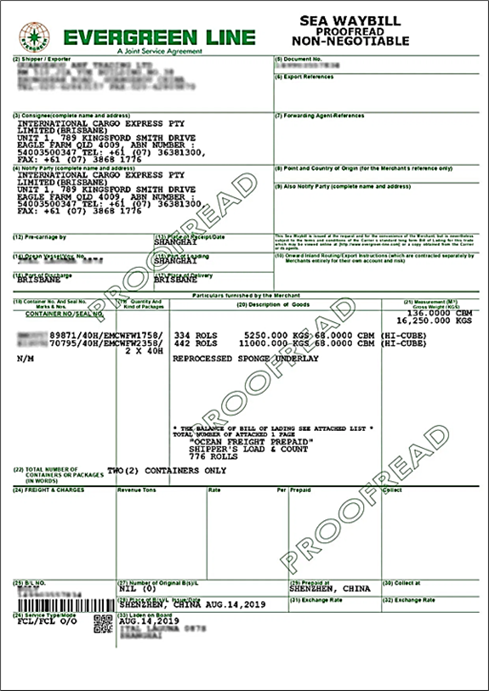
Bills of lading are required where a negotiable document of title is needed as security for payment. In some situations, such security is not necessary — for example, where a multinational company transfers goods between subsidiaries, or where parties with a long-standing trading relationship deal on credit and trust. In these cases, a bill of lading is not needed.
Where no negotiable document of title is required, parties may use a sea waybill. A sea waybill is similar to a bill of lading but performs only two of its three functions:
- It acts as a receipt for the goods
- Provides evidence of the contract of carriage
It is not a negotiable document of title, as indicated by the words Non-Negotiable Sea Waybill. The carrier delivers the goods to the named consignee upon identification, without requiring presentation of the original document.
Sea waybills are also used in short sea trades, such as the trans-Tasman trade between Australia and New Zealand, where the ship may arrive at its destination before the shipping documents