Study Guide
2. Rules of Origin
2.1. Overview
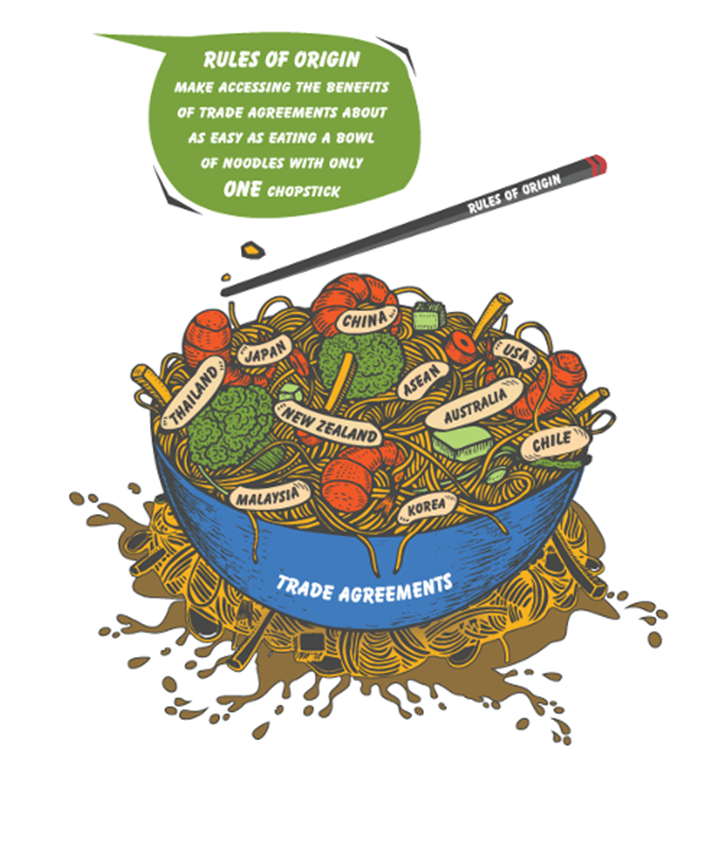
Figure 3: Rules of Origin make accessing the benefits of trade agreements about as easy as eating a bowl of noodles with only one chopstick.
Source: Australian Government Productivity Commission, 2017
Rules of Origin are often complex. The 1992 Agreement establishing the European Economic Area illustrates the scale: its Rules of Origin sits in Protocol 4 and contains 40 Articles, 8 Titles, 7 Annexes, across 151 pages.
This chapter looks at the law developed to deal with that complexity. The international instruments on Rules of Origin are less developed than those for Tariffs and Valuation. The World Trade Organization's (WTO) Agreement on Rules of Origin is designed to help resolve this, and there is a complete Specific Annex in the Revised Kyoto Convention (RKC) dealing with Rules of Origin (see Specific Annex K), but gaps in the law remain. We will examine these international instruments focusing on how governments are directed to administer the rules domestically. It is then up to companies such as DHL to seek to explain the rules to their customers, as seen in: DHL Guidance on Rules of Origin.