Supply Chain Security Study Guide
| เว็บไซต์: | Centre for Customs and Excise Studies |
| รายวิชา: | DHL International Customs Program 2026: Cohort 1 |
| Book: | Supply Chain Security Study Guide |
| Printed by: | Guest user |
| Date: | วันเสาร์, 17 ตุลาคม 2026, 3:32AM |
สารบัญ
- 1. Introduction
- 2. Background to supply chain security
- 3. International terrorism
- 4. United States response
- 4.1. 24 Hour Advance Vessel Manifest Rule
- 4.2. 10 plus 2 – Importer Security Filing (ISF)
- 4.3. Air Cargo Advance Screening (ACAS)
- 4.4. Container Security Initiative (CSI)
- 4.5. Customs Trade Partnership Against Terrorism (CTPAT)
- 4.6. Secure Freight Initiative - 100% container scanning
- 4.7. Transport Security Agency - Air Cargo Security Regulations
- 5. International Response
- 6. Regional responses
- 7. Conclusion: The Roles of Customs and Industry
- 8. Bibliography
1. Introduction
Security of international trade came into sharp focus following the terrorist attacks on the United States in September 2001. Governments and international bodies moved quickly to harden supply chains against terrorism and related criminal activity, and the response shaped the customs and trade environment that freight forwarders work in today.
This module covers the building blocks of a supply chain and how international terrorism reshaped cross-border trade. It then walks through the layered programs that followed: US measures including CTPAT, the Container Security Initiative, advance manifest reporting, and TSA air cargo rules; international frameworks led by the WCO, IMO, and ICAO; and regional responses from the European Union and APEC. The closing sections set out how Customs and business each contribute to securing global trade.
2. Background to supply chain security
Learning objectives
|
✓ |
Explain why supply chain security has become a major focus of international trade policy |
|
✓ |
Define supply chain, supply chain management and supply chain security management |
|
✓ |
Identify the three principles that determine the effectiveness of a supply chain |
|
‘The terror and tragedy of September 11, 2001, have emphasized the need for reforms in border and transport infrastructure. Terrorist attacks can seriously disrupt the passage of people, goods, and modes of transport across borders. Measures designed to stop terrorism can add certainty and stability to the global economy, raise investor confidence, and facilitate trade. Secure trade is now as important as free trade.’ (World Bank, 2003, p182) |
Government and business were concerned that international terrorists could use supply chain systems to carry weapons of mass destruction, or to destroy critical parts of the supply chain itself. This drove momentum for new supply chain security standards at national, regional and global levels. Many of these programs were introduced quickly after 9/11 but have now become a permanent feature of international trade:
|
Since the terrorist attacks on 11 September 2001, the number of initiatives that have the aim of strengthening security in the international supply chain has increased rapidly. The initiatives consist of programmes for partnership between customs authorities and companies, rules for advance communication of data on international shipments, minimum security requirements, standardisation of security management and cooperation between companies. Most of the initiatives have been taken by governments or customs authorities but many international organisations are also active in this field. (Kommerskollegium 2008) |
National measures alone are not enough. Governments have recognized that they must work with the private sector and with other governments to secure the supply chain end to end. This has produced a coordinated international approach, delivered through international organizations and through the industries that operate the supply chain.
2.1. Elements of a supply chain
Terminology
Supply chains are central to any understanding of international trade. A full study of supply chain management is beyond this module, but a small number of definitions will help you make sense of the security initiatives that follow.
|
Supply chain |
Supply chain management |
Supply chain security management |
|
The network of organizations that source raw materials, manufacture goods, and deliver them to the end user. |
The coordination of sourcing, production, inventory, transportation, and storage across these parties. The objective is to meet customer service requirements at minimum cost. |
The application of policies, procedures, and technology to protect supply chain assets (products, facilities, equipment, information, personnel) from theft, damage, and terrorism, and to prevent unauthorized contraband, people, or weapons of mass destruction entering the supply chain. |
The role of information in the supply chain
Supply chain management coordinates the design, procurement, and flow of goods, services, information and finances from raw material to parts supplier to manufacturer to distributor to retailer to consumer.
The process includes:
|
Product design |
Order generation |
|
Order taking |
Information feedback |
|
Timely delivery of goods and services |
|
Effective supply chain management gets the right goods to the right place, at the right time, in the right quantity, and at acceptable cost. This depends on coordination and feedback at every link in the chain, and information management is the foundation that holds it together.
The efficient and secure exchange of trade information is therefore central to international trade. As covered in Module 1, trade documents remain the primary way information moves across the supply chain, despite advances in information and communications technology. Billions of documents are exchanged each year, and UNCTAD has noted that traders and transport operators sometimes handle up to 40 original documents per shipment, with as many as 200 data elements on average and significant repetition between forms.
Cost is only part of the problem. Paper-based, non-standardized documents are slow, error-prone, and ill-suited to the speed and complexity of modern trade. They raise administrative costs for business and compliance costs for government. Simplified, internationally aligned documents allow common rules across countries and regions, and they are the first step toward electronic submission and Customs automation.
Improving effectiveness
The following three principles determine how effective a supply chain is: transparency, efficiency, and predictability.
|
Principle |
What it means |
Where it's anchored |
|
Transparency |
Every party in international trade understands their roles and obligations under Customs law. This is the basis of informed compliance, a shared objective of government and industry. |
General Annex to the Revised Kyoto Convention (covered in Module 2). |
|
Efficiency |
Goods move through the supply chain quickly and at acceptable cost, without weakening compliance. |
Applied through the measures shown in the table below. |
|
Predictability |
Clearance times and outcomes are consistent across identical goods, traders, and countries of origin, so importers and exporters can plan and avoid unnecessary inventory costs. |
A rational screening process using risk assessment and post-transaction compliance (covered in Module 2). |
The Efficiency principle is the broadest in practice. The measures below show how it is applied without weakening compliance objectives.
|
Area |
Measures |
|
Documentation |
Simplification and rationalization of documentation requirements. |
|
Allowing a single, commercially based document to satisfy both import and export requirements (for example, based on UN Layout Key Standards). |
|
|
Reducing the number of nation-specific documents, signature requirements, and stamp procedures that do not add value. |
|
|
Clearance location |
Conducting clearance audits and inspections off-site or at the trader's premises to avoid port and cargo area congestion. |
|
Clearing express carriers' documents and packages on the carrier's premises to support importers' just-in-time needs. |
|
|
Timing of clearance |
Permitting electronic advance submission of data so that goods can be released immediately on arrival. |
|
Providing pre-arrival processing and expedited clearance for low-risk shipments from importers with a strong compliance history. |
|
|
Risk-based controls |
Applying selectivity-based compliance measurement, risk assessment, and profiling to minimize physical examination of goods. |
|
Electronic data exchange |
Allowing electronic data submission using international standards such as UN/EDIFACT. |
|
Penalties |
Applying clear penalties for negligent documentation errors, with a process to mitigate those penalties based on the degree and frequency of negligence. |
3. International terrorism
This chapter explains why governments now treat international terrorism as a direct threat to the supply chain. To respond well, you first need to understand how modern terrorist groups operate and the kind of damage an attack on a supply chain could cause.
Learning objectives
|
✓ |
Describe how the nature of terrorism has changed and why it now affects international trade |
|
✓ |
Explain the short-term and longer-term economic impact of terrorism on trade |
|
✓ |
Identify why containers and major transport infrastructure are key targets |
The extracts below are drawn from a range of reports examining the growth of international terrorism and the way that terrorist groups operate.
|
“Terrorism is not a new phenomenon. But, as Professor Paul Wilkinson explained in his evidence, until recently it was primarily a problem for national governments confronting specific sovereignty/territorial conflicts, such as with the IRA in Northern Ireland and ETA in Spain. Although not without an international dimension, terrorism was not a major preoccupation for the international community. The most significant change in recent years has been the development of global terrorism, of which the leading exponent is the Al Qaeda network: according to Professor Wilkinson it was the emergence of Al Qaeda that changed the situation. (House of Lords 2005) |
In a report published by the Centre for Defence and International Security Studies (CDISS), terrorism is defined as follows:
|
"Terrorism is politically (including ideologically, religiously or socially) motivated violence, directed generally against non-combatants, intended to shock and terrify, in order to achieve a strategic outcome" (Williams as cited in Ellerbeck and Mason, 2005). |
Over the last thirty years globalization has accelerated. Easier travel, the information technology revolution, and the spread of worldwide communications and financial networks have made the world smaller and more connected.
These benefits have not been confined to legitimate actors. Globalization has also extended the reach of terrorist groups and criminal networks. It has given terrorist organizations the ability to operate globally, to the point that global terrorism has become the largest challenge to globalization itself.
Global media also gives any terrorist incident worldwide exposure within minutes, often in real time. Terrorist groups can therefore reach a much wider target audience and publicize their cause across the world.
The nature of any specific attack is hard to predict, but the aim is consistent: cause fear, create major disruption, and gain maximum exposure. Many possible attacks on the supply chain would meet all three of these aims.
The use of cargo containers to carry weapons of mass destruction into major ports is a primary concern. Many ports and the transport infrastructure that connects them, road and rail, sit at the heart of major cities. The detonation of a container at a port, or while moving through the road or rail system, would deliver each of the three terrorist aims above.
3.1. Economic impact
The impact of terrorism is felt not only in the country of attack but also in countries linked to it through trade. A significant attack on the United States, for example, that closed United States seaports and airports for any length of time, would have a major impact on a key trading partner such as China.
The impact is not only short term. A study by the Australian Department of Foreign Affairs, Combating Terrorism in the Transport Sector – Economic Costs and Benefits, found that:
|
“… in addition to the short-term disruptive economic effects of terrorist attacks, the ongoing threat of terrorism will have a medium to long-term impact on the world economy. (DFAT, 2004) |
The study found that one of the major impacts is the operating cost burden on governments and businesses as they put security measures in place. Businesses must also hold larger inventories in case of disruption and pay higher insurance premiums. Over time, these costs can reduce productivity.
The economic impact on countries that cannot meet new supply chain security standards may be even more significant. Many developing countries already face difficult trade conditions, including challenging terrain, limited infrastructure and long distances from trading partners. Transport costs make up a larger share of the value of their exports than is the case for richer countries (World Bank 2003). Adding the necessary security measures may be financially difficult for suppliers and governments in these countries. The result may be that their trading partners turn instead to suppliers in countries that can meet the standards.
4. United States response
Learning objectives
|
✓ |
Identify the main United States supply chain security initiatives introduced after 9/11 |
|
✓ |
Explain how each initiative collects information or controls access to United States-bound cargo |
|
✓ |
Describe how these measures have influenced supply chain practice beyond the United States |
Following 9/11, the United States Government introduced a series of supply chain security initiatives, most of them sitting under the Department of Homeland Security (DHS), created in 2002. DHS comprises more than 20 federal agencies, including Customs, Immigration, Coast Guard, Secret Service, and the Transportation Security Administration (TSA). Most of the initiatives covered here are operated by United States Customs and Border Protection (CBP). They were created through separate legislation and funding cycles, so they are not always integrated, but many have become templates that other governments and international bodies have since adopted or adapted. CBP describes its approach this way:
|
“CBP employs an effective risk-based, layered approach to securing the global supply chain. Advanced information is screened using automated systems and analysed by trained personnel in order to provide actionable information to CBP officers. The screening and analysis of this information allows CBP to focus its resources on those shipments of concern, while facilitating the movement of legitimate cargo. In addition to receiving advanced information, CBP partners with industry members to enhance their own security practices throughout the international supply chain. Foreign government partnerships also provide valuable insight into potentially harmful shipments, and, in some locations, have allowed CBP to deploy scanning systems to scan containers for radiation. Finally, CBP has positioned technology at all ports of entry that serve as force multipliers for officers in the field. Taken in combination, these layers provide meaningful supply chain security” (CBP 2010a) |
The United States has continued to strengthen its supply chain measures over the last 15 years. The initiatives covered in this chapter are important to study because, in many cases, they have set the template for international, regional, and other national responses to supply chain security.
|
Year |
Initiative |
Focus |
|
2003 |
24 Hour Advance Vessel Manifest Rule (AMR) |
Carriers submit cargo data 24 hours before loading |
|
2006 (SAFE Port Act) |
10+2 Importer Security Filing (ISF) |
Importers add 10 data elements; carriers add 2 |
|
2010 pilot, 2018 mandatory |
Air Cargo Advance Screening (ACAS) |
Advance air cargo data for risk targeting |
|
2002 |
Container Security Initiative (CSI) |
Bilateral inspection at foreign loading ports |
|
2001 |
CTPAT (Customs Trade Partnership Against Terrorism) |
Voluntary trader-government security partnership |
|
2006 (rebadged 2010) |
Secure Freight Initiative (SFI) / International Container Security (ICS) |
Radiation and non-intrusive scanning at foreign ports |
|
2001 (ATSA); 2007 (9/11 Act) |
TSA Air Cargo Security Regulations |
100% screening of cargo on passenger flights |
4.1. 24 Hour Advance Vessel Manifest Rule
|
1 |
What it does Requires cargo data to be filed with CBP before US-bound containers are loaded onto a ship at the foreign port. |
|
2 |
When it applies All sea cargo destined for the United States. |
|
3 |
Who is responsible The cargo carrier. |
|
4 |
Status Mandatory; in force since February 2003. |
Under the Advance Manifest Rule (AMR), the carrier must submit detailed cargo data to CBP at least 24 hours before containers are lifted onto a US-bound ship. The original requirement was 14 data elements, transmitted electronically. Containers can only enter the United States if this information has been provided to Customs at least 24 hours before loading. CBP uses the data to pre-screen containers of concern before arrival and to select containers for inspection at the port of entry. Vague descriptions such as "freight all kinds" (FAK), "said to contain…" (STC), "chemicals", and "foodstuffs" are no longer acceptable.
In practice, ocean carriers and NVOCCs (non-vessel operating common carriers) set their own earlier deadlines on shippers, on top of the 24-hour cut-off, so they can collect, process, and transmit the data to CBP on time. Containers may sit idle at the port for an extra day on top of the typical 2–3 day wait. Perishables such as food are often at the farm gate 24 hours before being loaded into a container and put on a ship, in order to maintain freshness.
The rule is no longer exclusive to the United States. China Shanghai Customs introduced a 24-hour manifest rule in 2014.
4.2. 10 plus 2 – Importer Security Filing (ISF)
|
1 |
What it does Adds 12 data elements to the original 24-hour AMR filing, pushing visibility further upstream to the point where the container is stuffed. |
|
2 |
When it applies All sea cargo destined for the United States, including goods entering a foreign trade zone (FTZ). |
|
3 |
Who is responsible The importer (10 elements) and the carrier (2 elements). |
|
4 |
Status Mandatory; required by the SAFE Port Act of 2006. |
After several years of operation, the United States determined that the information provided by carriers under the original 24-hour AMR was not sufficient for security screening, particularly information from earlier in the supply chain. The SAFE Port Act of 2006 introduced 12 additional data elements: 10 from the importer and 2 from the carrier.
Importer requirements (the "10")
|
Fixed Data — Exact information required |
|
|
1 Seller The party selling the goods to the US buyer. |
2 Buyer The party purchasing the goods — typically the US importer. |
|
3 Importer of record No. / FTZ applicant ID The IRS EIN, SSN, or CBP-assigned number identifying the party responsible for the entry or FTZ admission. |
4 Consignee number(s) Identifies the party to whom the goods are consigned in the United States. |
|
Flexible Data — Range permitted initially; exact data required 24 hrs before vessel arrival |
|
|
5 Manufacturer (or supplier) The factory or supplier producing the goods. A range may be provided initially — must be finalised before arrival. |
6 Ship to party The party to whom the goods will be delivered after Customs release. A range is permitted initially. |
|
7 Country of origin The country where goods are manufactured or produced. A range may be submitted initially. |
8 Commodity HTSUS number The Harmonized Tariff Schedule classification number for the goods. A range is permitted initially. |
For four of these elements — manufacturer (or supplier), ship to party, country of origin, and commodity HTSUS number — the importer may submit a range of responses initially. More accurate data must follow as soon as it becomes available, and no later than 24 hours prior to the ship's arrival at a US port.
Two additional importer elements must be submitted as early as possible, but no later than 24 hours prior to the ship's arrival at a US port:
|
Two additional importer elements – Due 24 Hours before vessel arrival |
|
|
9 Container Stuffing Location The location (address) where the goods were loaded into the container. Must be submitted as early as possible, no later than 24 hours before vessel arrival at a US port. |
10 Consolidator The party (name and address) who stuffed the container or arranged the consolidation of goods. Must also be submitted no later than 24 hours before vessel arrival. |
Carrier requirements (the "+2")
In addition to the existing 24-Hour Rule, the carrier must submit:
|
Vessel Stow Plan |
Container Status Messages (CSM) |
|
no later than 48 hours after the carrier's departure from the last foreign port. For voyages less than 48 hours, CBP must receive the information prior to the vessel's arrival at the first US port. The stow plan must include the vessel name, vessel operator, and voyage number. |
submitted to CBP daily for certain events relating to all containers laden with cargo destined for the US by vessel. |
|
|
Further Reading: Importer Security Filing '10+2' For more information on 10+2, go to Importer Security Filing '10+2'. |
4.3. Air Cargo Advance Screening (ACAS)
|
1 |
What it does Collects air cargo information at the earliest practical point in the supply chain so it can be screened before loading. |
|
2 |
When it applies All air cargo destined for the United States. |
|
3 |
Who is responsible Airlines and air carriers. |
|
4 |
Status Mandatory since June 2018 (initially a voluntary pilot from 2010). |
ACAS was introduced after a terrorist attempt in October 2010, in which explosives were concealed in packages on a US-bound aircraft from Yemen. CBP and TSA worked with the private sector to identify ways to strengthen air cargo supply chain security, including a way to collect cargo information at the earliest practical point in the supply chain. The ACAS pilot was the result of this work. Participation was initially voluntary, but is now mandatory for all airlines and carriers flying to the United States.
|
|
Further Reading: Air Cargo Advance Screening (ACAS) For a full explanation, see Air Cargo Advance Screening (ACAS). |
4.4. Container Security Initiative (CSI)
|
1 |
What it does Collects air cargo information at the earliest practical point in the supply chain so it can be screened before loading. |
|
2 |
When it applies Sea cargo at participating foreign ports under bilateral agreement. |
|
3 |
Who is responsible CBP officers stationed at the foreign port, working with host Customs. |
|
4 |
Status Operational; established through bilateral agreements with partner governments. |
Under the Container Security Initiative (CSI), the United States and partner governments push inspections and screening upstream to the originating ports. The goal is a series of bilateral agreements that allow the exchange of Customs officers and more screening of shipments at the outbound port. CBP officers work with host Customs officers to ensure that containers are targeted and screened using non-intrusive inspection (NII) and radiation detection technology. The aim is for CBP's overseas CSI teams to review every manifest before containers are loaded on vessels destined for the United States. Where the volume of trade prevents the local team from reviewing every bill, CSI targeters at the National Targeting Centre — Cargo provide additional support so that 100 percent review is still achieved.
|
|
Further Reading: CSI: Container Security For an up-to-date account of the reach and effectiveness of CSI, see CSI: Container Security Initiative. |
4.5. Customs Trade Partnership Against Terrorism (CTPAT)
|
1 |
What it does A voluntary trade partnership program in which supply chain parties commit to security standards in exchange for trade facilitation benefits. |
|
2 |
When it applies All modes of transport. |
|
3 |
Who is responsible Importers, carriers, customs brokers, freight forwarders, and other supply chain parties that choose to participate. |
|
4 |
Status Voluntary; the largest US trade-government partnership program. |
CTPAT encourages supply chain parties to improve security and rewards them with benefits such as reduced cargo examinations. The basic process is:
|
01 Sign agreement with CBP to cooperate, assess and improve security |
02 Self-assessment by applicant against Security Guidelines |
|
03 Application (file Security Profile) |
04 Certification after background investigation and document review (Tier 1) |
|
05 Validation after on-site assessments, including at foreign locations (Tier 2) |
06 Compliance with additional guidelines (Tier 3) |
|
07 Periodic re-assessment and revalidation every 4 years |
|
The 2024 CTPAT Impact Report states that the program now has 10,869 partners, with 2,407 validations completed in 2024. Membership remains voluntary, but companies that have not joined are likely to find it more difficult to partner with companies certified under CTPAT or other World Customs Organization (WCO) accredited security programs (Authorized Economic Operator).
|
|
Further Reading: CTPAT 2024 Impact report The latest CTPAT Impact report is available at CTPAT 2024 Impact Report |
4.6. Secure Freight Initiative - 100% container scanning
|
1 |
What it does Scans US-bound containers at participating foreign ports for nuclear and radiological material before loading. |
|
2 |
When it applies Sea cargo at participating foreign ports. |
|
3 |
Who is responsible CBP, in cooperation with the host country government. |
|
4 |
Status Operational at limited ports; rebadged from SFI to International Container Security (ICS) in 2010 after funding cuts. |
In December 2006 the United States Department of Homeland Security commenced the initial phase of the Secure Freight Initiative (SFI), deploying nuclear detection technology at six foreign ports:
n Port Qasim in Pakistan
n Puerto Cortes in Honduras
n Southampton in the United Kingdom
n Port Salalah in Oman
n Port of Singapore
n Port Busan in Korea (Gamman Terminal)
Port Qasim, Puerto Cortes and Southampton commenced scanning all maritime containers destined for the United States for nuclear or other radiological materials in October 2007.
Under SFI, an integrated scanning system, consisting of radiation portal monitors (RPM) provided by the United States Department of Energy (DOE) National Nuclear Security Administration and non-intrusive inspection (NII) imaging systems provided by CBP, is used to scan containers as they move through the pilot locations. Through optical character recognition (OCR) technology, data from these systems is integrated and provided to CBP officers, who can use it, alongside customary data sources, to determine whether the container should be referred to the host nation for secondary examination before being loaded onto a vessel destined for the United States.
In 2010, after funding cuts, CBP rebadged the overseas scanning initiative from SFI to International Container Security (ICS). The ICS program is operational and is currently scanning all United States-bound containers laden in the Port of Qasim, Pakistan; Port of Shuaiba, Kuwait; and, in a limited capacity, Salalah, Oman. CBP is negotiating with the Governments of Jordan and Egypt to begin scanning operations at the ports of Alexandria (Egypt) and Aqaba (Jordan). CBP is also negotiating with the Government of Pakistan to expand scanning operations to the port of Karachi. During 2010, the SFI pilots at the ports of Busan, Southampton and Puerto Cortes officially ended by mutual agreement between DHS and those Governments.
4.7. Transport Security Agency - Air Cargo Security Regulations
|
1 |
What it does Sets security standards for air cargo carried on passenger and all-cargo aircraft into, out of, and within the United States. |
|
2 |
When it applies Air cargo regulated under US aviation security law. |
|
3 |
Who is responsible TSA, working with air carriers, indirect air carriers, and shippers. |
|
4 |
Status Mandatory; established by the Aviation and Transportation Security Act (ATSA) of November 2001. |
TSA was established by the federal Aviation and Transportation Security Act (ATSA) of November 2001. Section 110 of the new law charged the TSA with:
|
the screening of all passengers and property, including United States mail, cargo, carry-on and checked baggage, and other articles, that will be carried aboard a passenger aircraft operated by an air carrier or foreign air carrier in air transportation or intrastate air transportation. In the case of flights and flight segments originating in the United States, the screening shall take place before boarding and shall be carried out by a Federal Government employee… (TSA 2006a) |
The latest TSA Cargo Screening Program web page states that:
|
As required by section 1602 of the “Implementing Recommendations of the 9/11 Commission Act of 2007” (9/11 Act), TSA requires 100% of cargo transported on passenger aircraft to be screened at a level of security commensurate with the level of security for the screening of passenger checked baggage. |
5. International Response
Learning objectives
|
✓ |
Describe the structure and core principles of the WCO SAFE Framework of Standards |
|
✓ |
Explain how the Authorized Economic Operator (AEO) program works and the role of mutual recognition |
|
✓ |
Identify the role of the IMO and ICAO in supply chain security through the ISPS Code and Annex 17 |
A number of international organizations responded to the terrorism threat by developing international standards to guide member countries in implementing appropriate responses. This chapter looks at the responses of the World Customs Organization (WCO), the International Maritime Organization (IMO), and the International Civil Aviation Organization (ICAO).
5.1. WCO Framework of Standards
|
1 |
What it does Sets global Customs standards for securing and facilitating international trade through three pillars: Customs-to-Customs cooperation, Customs-to-business partnership, and Customs-to-other-government-agency cooperation. |
|
2 |
When it applies All modes of transport, for participating WCO member Customs administrations and the businesses operating in their jurisdictions. |
|
3 |
Who is responsible WCO member Customs administrations (Pillars 1 and 3); Authorized Economic Operators in the private sector (Pillar 2). |
|
4 |
Status SAFE Framework adopted by the WCO Council in June 2005; current edition published 2025. Not strictly legally binding, but the vast majority of members have committed to implementation. |
After 9/11 it became clear that Customs administrations across the world would be expected to deliver a higher level of trade security. For many member administrations still working to implement better trade facilitation, the new expectation was both significant and seemingly contradictory.
Over the next three years the WCO developed guidelines for Customs administrations to secure global trade in a way that continued to facilitate it. A central part of this approach is the recognition that Customs needs to partner with business in a new and more integrated way. The result was the WCO Framework of Standards to Secure and Facilitate Global Trade (SAFE Framework). The original SAFE had two pillars: Customs-to-Customs network arrangements, and Customs-to-business partnerships. A third pillar has since been added: Customs-to-Government networks.
In developing SAFE, the WCO based its standards on existing WCO instruments (e.g. Revised Kyoto Convention) and on other measures developed for security and trade facilitation. The Framework was adopted by the WCO Council in June 2005. The vast majority of members have since expressed their intention to implement the Framework, even though it is not strictly legally binding.
The most recent edition of SAFE (2025) has the following aims:
|
✔️ Standard establishment: Establish standards that provide supply chain security and facilitation at a global level to promote certainty and predictability. |
|
✔️Integrated management: Enable integrated and harmonized supply chain management for all modes of transport. |
|
✔️ Customs capability: Enhance the role, functions and capabilities of Customs to meet the challenges and opportunities of the 21st Century. |
|
✔️Risk detection: Strengthen co-operation between Customs administrations to improve their capability to detect high-risk consignments. |
|
✔️ Customs-to-Customs cooperation: Strengthen co-operation between Customs administrations, for example through exchange of information, mutual recognition of controls, mutual recognition of Authorized Economic Operators (AEOs), and mutual administrative assistance. |
|
✔️Inter-agency cooperation: Strengthen co-operation between Customs administrations and other Government agencies involved in international trade and security such as through Single Window. |
|
✔️ Customs-to-Business cooperation: Strengthen Customs/Business co-operation, particularly through AEO accreditation. |
|
✔️Seamless trade flow: Promote the seamless movement of goods through a secure international trade supply chain. |
Five Core Principles
|
01 Advance electronic information Harmonize the advance electronic information requirement on inbound, outbound and transit shipments. |
02 Risk management Commit to employing a consistent risk management approach to address security threats. |
|
03 Outbound inspection Outbound inspection of high-risk consignments being exported, preferably using non-intrusive inspection methods. |
04 Business partnerships Customs will provide benefits to businesses that meet minimal supply chain security standards and best practices. |
|
05 Collaboration with other government agencies Enhance and promote close cooperation with Other Government Agencies (OGAs). |
|
|
|
Further Reading: Five Core Elements of the SAFE Framework The full text of the five core elements of the SAFE Framework can be accessed at the following link: http://publications.wcoomd.org/p412/SAFE-Framework-of-Standards---2007/product_info.html?osCsid=64ef0797bca67a660c3af0b82a49861c http://publications.wcoomd.org/images/upload/pdf/SAFEFRAMEWORK2007.pdfWCO Safe Framework of Standards |
The WCO recognized the need for capacity building strategies to enhance members' ability to implement the Framework.
Pillar 1 Customs to Customs
The Customs-to-Customs pillar requires member administrations to work cooperatively, within agreed standards, to move cargo quickly and securely. The major focus of this pillar is the adoption of technology that allows for the quick identification and examination of suspect cargo. The requirements include the provision of advanced electronic information on cargo, automated targeting tools, and modern technology (X-ray, gamma ray and similar) for cargo inspection.
|
# |
Standard |
What It requires |
|
1 |
Integrated Supply Chain Management |
The Customs administration should follow integrated Customs control procedures as outlined in the World Customs Organization's (WCO) Customs Guidelines on Integrated Supply Chain Management (ISCM Guidelines). |
|
2 |
Cargo Inspection Authority |
The Customs administration should have the authority to inspect cargo originating, exiting, transiting (including remaining on board), or being transhipped through a country. |
|
3 |
Modern Technology in Inspection Equipment |
Non-intrusive inspection equipment and radiation detection equipment should be available and used for conducting inspections, where available and in accordance with risk assessment. This equipment is necessary to inspect high-risk cargo and/or transport conveyances quickly, without disrupting the flow of legitimate trade. |
|
4 |
Risk-Management Systems |
The Customs administration should establish a risk-management system to identify potentially high-risk cargo and/or transport conveyances and automate that system. This management system should include a mechanism for validating threat assessments and targeting decisions and implementing best practices. |
|
5 |
Selectivity, profiling and targeting |
Customs should use sophisticated methods to identify and target potentially high-risk cargo, including - but not limited to - advance electronic information about cargo shipments to and from a country before they depart or arrive; strategic intelligence; automated trade data; anomaly analysis; and the relative security of a trader’s supply chain. For example, the Customs-Business Pillar certification and validation of point-of-origin security reduces the risk, and, therefore, the targeting score. |
|
6 |
Advance Electronic Information |
The Customs administration should require advance electronic information in time for adequate risk assessment to take place. |
|
7 |
Targeting and Communication |
Customs administrations should provide for joint targeting and screening, the use of standardized sets of targeting criteria, and compatible communication and/or information exchange mechanisms; these elements will assist in the future development of a system of mutual recognition of controls. |
|
8 |
Performance Measures |
The Customs administration should maintain statistical reports that contain performance measures including, but not limited to, the number of shipments reviewed, the subset of high-risk shipments, examinations of high-risk shipments conducted, examinations of high-risk shipments by Non-intrusive inspection technology, examinations of high-risk shipments by Non-intrusive inspection and physical means, examinations of high-risk shipments by physical means only, Customs clearance times and positive and negative results. Those reports should be consolidated by the WCO. |
|
9 |
Security Assessments |
The Customs administration should work with other competent authorities to conduct security assessments involving the movement of goods in the international supply chain and to commit to resolving identified gaps expeditiously. |
|
10 |
Employee Integrity |
The Customs administration and other competent authorities should establish programmes to prevent lapses in employee integrity and to identify and combat breaches in integrity to the extent possible. |
|
11 |
Outbound Security Inspections |
The Customs administration should conduct outbound security inspection of high-risk cargo and/or transport conveyances at the reasonable request of the importing country. |
|
Note: benefits for WCO members The benefits for WCO Members include enhanced security, increased efficiency, improved Customs control and compliance, revenue compliance, and trade facilitation. Most of those benefits may be amplified by a cooperative arrangement between Customs and business. Furthermore, WCO Members who express the political will to implement the Framework are eligible for WCO strategic support at various phases of implementation and will have more opportunities to benefit from support from other Members or donors. |
Pillar 2 Customs to Business
The Customs-to-Business pillar establishes a partnership between Customs administrations and the private sector to ensure private sector involvement in securing the supply chain. Critically, businesses that can provide a high degree of security guarantees through these partnership arrangements are rewarded with expedited processes. As SAFE itself states:
To the extent that Customs can rely on its partners in the trade community to evaluate and address threats to their own supply chain, the risk confronting Customs is reduced. Therefore, companies that demonstrate a verifiable willingness to enhance supply chain security will benefit. Minimizing risk in this way helps Customs in performing their security functions, and in facilitating legitimate trade.
The six standards of Pillar 2 are:
|
# |
Standard |
What It requires |
|
1 |
Partnership |
Authorized Economic Operators involved in the international trade supply chain will engage in a self-assessment process measured against pre-determined security standards and best practices to ensure that their internal policies and procedures provide adequate safeguards against compromise of their supply chains until cargo is released from Customs control at destination. |
|
2 |
Security |
Authorized Economic Operators will incorporate pre-determined security best practices into their existing business practices. |
|
3 |
Authorization |
The Customs administration, together with representatives from the trade community, will design validation processes or quality accreditation procedures that offer incentives to businesses through their status as Authorized Economic Operators. These processes should, among others, define tangible benefits as specified in Annex IV that will ensure that they see a benefit to their investment in good security systems and practices, including, at a minimum, fewer documentary examination and physical inspections, and expedited release/clearance of their goods. |
|
4 |
Technology |
All parties will maintain cargo and container integrity by facilitating the use of modern technology. |
|
5 |
Communication |
The Customs administration will regularly update Customs-Business partnership programmes to promote minimum security standards and supply chain security best practices. |
|
6 |
Facilitation |
The Customs administration will work co-operatively with AEOs to maximize security and facilitation of the international trade supply chain originating in or moving through its Customs territory. |
|
Note: benefits for business The benefits for business include enhanced security, uniformity and predictability, trade facilitation, and benefits specifically for AEOs. The AEO benefits are twofold: benefits associated with AEO status, that include enhanced security and a safer work environment, improved Business-Client and Customs-Business relationships and increased efficiency; and benefits given by Customs as incentives that include various special border procedures, lower inspection rates and reduced border clearance time. |
Pillar 3 Customs cooperation with other agencies
Many government agencies cooperate with Customs in the area of supply chain security. Partnering agencies include, but are not limited to, transport security authorities, interior authorities (such as police), agencies operating at the border (such as quarantine and standards), and licensing agencies (such as those for dual use goods). The forms of mutual cooperation are varied: agencies may share common facilities, equipment and databases, exchange information, and jointly conduct targeting and risk assessment, program validations, or inspections. Cooperation may also include aligning the various agencies' security programs and control measures.
Cooperation across agencies is essential at the national level. Given the nature of the global supply chain, effective cooperation must also be promoted bilaterally and multilaterally between organizations representing different sectors and regulatory areas, in order to foster international harmonization and reduce the burden on both trade and government.
To assist with the implementation of this Pillar, members are referred to WCO tools and instruments including the Revised Kyoto Convention, Coordinated Border Management Compendium, Single Window Compendium, AEO Compendium, and Risk Management Compendium.
|
# |
Standard |
What It requires |
||
|
1 |
Mutual Cooperation |
Governments should foster mutual cooperation between their Customs administration and other competent government agencies. |
||
|
2 |
Cooperative Arrangements/Procedures |
Governments should develop and maintain cooperative arrangements or procedures among their agencies that are involved in international trade and security. |
||
|
3 |
Alignment of Security Programmes |
Governments should where appropriate, align the requirements of the various security programmes/regimes that are implemented to enhance security of the international supply chain. |
||
|
4 |
Harmonisation of national control measures |
Governments should harmonize the supply chain security national control measures of government agencies, including risk management and risk mitigation, in order to limit any negative impact of those measures on legitimate trade and international movement. |
||
|
5 |
Development of continuity and resumptions measures |
Customs should work with other government agencies as well as the private sector to identify their respective roles and responsibilities in relation to trade continuity and resumption measures in order to continue trade in the event of a disruptive incident. |
||
|
6 |
Harmonisation of data filing requirements |
Customs should develop cooperative arrangements with other government agencies that require data for the clearance of goods in order to facilitate the seamless submission, transfer, and reuse of international trade data, consistent with the Single Window concept. |
||
|
7 |
Mutual Cooperation |
Governments should foster mutual cooperation between Customs administrations and other competent government agencies involved with supply chain security across borders or within a Customs Union. |
||
|
8 |
Development of Cooperative Arrangement or protocols |
Governments should develop cooperative arrangements or protocols among their agencies that are working side by side on a shared border or within a Customs Union. |
||
|
9 |
Harmonisation of security programmes |
Governments should, where appropriate, harmonize the requirements of the various security programmes that are implemented to enhance security of the international supply chain. |
||
|
10 |
Harmonisation of cross border control measures |
Governments should work to harmonize cross-border control measures. |
||
|
11 |
Establishment of mutual cooperation |
Together, governments should foster cooperation between and among international bodies that are involved with supply chain security. |
||
|
12 |
Development of cooperative arrangements or protocol |
The WCO on behalf of its Members should develop and maintain cooperative arrangements with those international governmental bodies (e.g. ICAO, IMO and UPU) that are involved with supply chain security. |
||
Changes introduced in SAFE 2025
The WCO released its 2025 iteration of the SAFE Framework of Standards at the end of June 2025. The 2021 version remains largely unchanged, but has been adjusted in several places. As the Secretary-General of the WCO, Ian Saunders, states in his introduction:
|
This 2025 version marks a significant milestone in our continuing effort to advancing secure, efficient, and innovative international trade. It is designed to respond to emerging challenges and to harness opportunities that pave the way for a resilient global trading environment. |
The key changes in this iteration of SAFE are:
|
✔️ Greater emphasis on inter-agency cooperation, particularly with environmental agencies |
✔️ Heightened emphasis on internal risk |
|
✔️ AEOs are to have a robust Code of Conduct |
✔️ SAFE is to be made more accessible to micro and small and medium-sized enterprises (MSMEs) |
|
✔️ Customs are encouraged to share more best practices, including sealing techniques |
|
These changes have been delivered through the following adjustments:
A new paragraph has been inserted into the commentary on Pillar 1, Standard 1, Sealing:
|
Customs administrations should seek to learn from each other and from industry innovation on sealing (for example work on loss prevention and customer tracking) to understand how this can be used to improve the Customs risk assessment process and, subsequently, to highlight best practice. |
A new paragraph has been inserted into the commentary on Pillar 1 in relation to the cargo declaration:
|
Customs should consider enabling users to provide smarter, more accurate and more timely data to enhance and improve risk assessment and facilitation objectives. This could include using input from supply chain service providers, such as online marketplaces and supply chain management networks. This could lead to increased security, reduced false positives, provide more opportunities to resolve issues earlier before arrival, and enable more innovative models of cargo declaration. |
A new paragraph has been added to Standard 1 of Pillar 2:
|
It should be recognized that MSMEs that are part of larger AEO certified companies' supply chains have already undergone significant selection and vetting processes and are being managed by their vendors/partners. For example, this recognition/special status for MSMEs could be leveraged in the course of risk analysis being performed by Customs administrations. |
A new sentence has been added to the commentary in Pillar 2, Standard 5:
|
Customs should ensure that AEOs are consulted and informed with adequate advance notice before new policies and requirements are issued. |
A new paragraph has been added to the commentary in Pillar 2, Standard 6:
|
Customs administrations should ensure that AEOs are consulted before issuing new policies and requirements to allow AEOs to provide reasonable suggestions that will help avoid unintended negative consequences as well as allow for a better implementation within existing systems. |
A new paragraph has been added to the commentary under Pillar 3, Standard 1:
|
2.1.7 Mutual cooperation is encouraged between Customs and other cross-border agencies, in particular environmental authorities. Cooperation may include alignment of procedures and controls for applicable standards. |
|
|
Further Reading: WCO SAFE Framework of Standards The full text of the revised WCO Framework of Standards can be accessed at the following link: http://publications.wcoomd.org/p412/SAFE-Framework-of-Standards---2007/product_info.html?osCsid=64ef0797bca67a660c3af0b82a49861c http://publications.wcoomd.org/images/upload/pdf/SAFEFRAMEWORK2007.pdfWCO Safe Framework of Standards |
5.2. Authorized Economic Operators (AEO)
|
1 |
What it does Recognizes and rewards businesses that meet WCO supply chain security standards with faster Customs clearance and reduced examinations. |
|
2 |
When it applies Across the international supply chain, in countries that operate an AEO program. |
|
3 |
Who is responsible National Customs administrations (validation); businesses (compliance with security criteria). |
|
4 |
Status Voluntary; established under SAFE Pillar 2 and adopted by the WCO Council in June 2006. Mutual recognition between national programs is expanding (US has 19 MRAs; China and Korea each have over 30). |
The standards of Pillar 2 speak extensively of Authorized Economic Operators (AEOs). The Framework defines an AEO as:
|
…. a party involved in the international movement of goods in whatever function that has been approved by or on behalf of a national Customs administration as complying with WCO or equivalent supply chain security standards. Authorized Economic Operators include inter alia manufacturers, importers, exporters, brokers, carriers, consolidators, intermediaries, ports, airports, terminal operators, integrated operators, warehouses, distributors. |
In June 2006 the WCO Council adopted a document defining and setting the criteria for AEOs. AEOs include companies that have been approved by, or on behalf of, a national Customs organization as complying with WCO or equivalent supply chain security standards. The WCO has emphasized that the AEO program shall be voluntary, not mandatory.
In 2007 the WCO incorporated the AEO Guidelines into the Framework of Standards document. Under "Conditions and Requirements for Customs and the Authorized Economic Operator", the WCO has set out the following elements to consider when deciding whether a company should be granted AEO status:
|
AEO eligibility criteria |
|
|
Demonstrated compliance with Customs requirements |
|
|
Satisfactory systems for management of commercial records |
|
|
Financial viability |
|
|
Regular consultation, cooperation and communication with Customs and other competent authorities at local, national and international levels on supply chain security and facilitation, personnel education, training and awareness |
|
|
Information exchange with Customs that is secure and confidential |
|
|
|
Cargo security (manuals, seals, inspection procedures, secure access, verification of carrier identity, cargo description verification, cargo control and management, and similar) |
|
|
Conveyance security |
|
|
Premises security |
|
|
Personnel security |
|
|
Trading partner commitments to increase security; crisis management and incident recovery procedures |
|
|
Constant measurement, analysis and planning for improvement of all aspects of the security management system |
|
|
Further Reading: AEO and Customs Compliance scheme Now, a significant number of countries now operate AEO programs. The full list of AEO and Customs Compliance schemes is at https://aeo.wcoomd.org/list . |
An issue that emerged with the global roll-out of AEO programs is mutual recognition: where Customs in one country recognizes a company's AEO status in another country and provides equivalent benefits. For companies that operate across many countries, recognition of AEO status across borders is essential. Although mutual recognition is a key principle of the WCO guidelines, the practical work of getting each country comfortable with another's standard of validation has proved more difficult. Mutual recognition between the United States CTPAT program and the EU AEO program took more than four years to develop.
In 2007, the United States and the EU started work on Mutual Recognition between the CTPAT and EU AEO supply chain security programs. The initial steps were an in-depth comparison of the United States and EU AEO programs and a pilot in which CBP observed security components of the EU's AEO audit process.
To achieve mutual recognition of their respective CTPAT and AEO programs, the United States and EU had to work on the following:
|
Establish guidelines regarding information exchanges, including the exchange of validation/audit results and legalities associated with the disclosure of membership details |
|
|
Perform joint verifications to determine remaining gaps between AEO/C-TPAT and resolve any discrepancies |
|
|
Explore and test an export component for CTPAT |
|
|
Exchange best practices through joint visits and conferences |
|
|
Continue dialogue on legal and policy developments under the respective administrations |
|
|
|
Endorse and sign a Mutual Recognition Arrangement |
|
|
Evaluate Mutual Recognition benefits for AEO/CTPAT members |
CBP and the EU Taxation and Customs Union Directorate agreed language for the United States-EU Mutual Recognition Decision, and it was signed in May 2012. The United States now has 19 MRAs in place, while China and Korea both have more than 30.
|
|
Further Reading: Customs trade partnership against terrorism For more on the United States agreements, see Customs Trade Partnership Against Terrorism - Mutual Recognition. |
To make mutual recognition work, the key issues are common AEO requirements and consistent risk management approaches. Customs administrations need to use uniform criteria when assessing AEO status if companies are to benefit from worldwide participation in AEO programs. Companies need to be able to present information in the same format across different countries; otherwise the administrative burden makes full participation difficult.
5.3. International Maritime Organization (IMO) - Port and ship security
|
1 |
What it does Sets mandatory security standards for ships and port facilities engaged in international trade through the ISPS Code. |
|
2 |
When it applies Sea cargo; ships and port facilities covered by the SOLAS Convention. |
|
3 |
Who is responsible Contracting governments, port authorities, and shipping companies. |
|
4 |
Status ISPS Code adopted December 2002; in force since 1 July 2004. Mandatory under Part A; Part B contains supporting guidelines. |
In December 2002, 108 member states of the IMO adopted a series of measures to strengthen maritime security, with the aim of preventing and suppressing acts of terrorism against shipping. Adopting an international security code for shipping and ports was seen as essential, given the central role shipping plays in international trade.
The IMO adopted a number of amendments to the 1974 Safety of Life at Sea Convention (SOLAS), the most far-reaching of which enshrines the new International Ship and Port Facility Security Code (ISPS Code). The Code contains detailed security-related requirements for Governments, port authorities and shipping companies in a mandatory section (Part A), together with a series of guidelines about how to meet these requirements in a second, non-mandatory section (Part B). The IMO also adopted a series of resolutions designed to add weight to the amendments, encourage the application of the measures to ships and port facilities not covered by the Code, and pave the way for future work on the subject (IMO 2006).
The International Ship and Port Facility Security Code
In essence, the Code takes the approach that ensuring the security of ships and port facilities is fundamentally a risk management activity. To determine appropriate security measures, an assessment of the risks must be made in each particular case.
The purpose of the Code is to provide a standardized, consistent framework for evaluating risk, enabling governments to offset changes in threat with changes in vulnerability for ships and port facilities.
To begin the process, each Contracting Government conducted port facility security assessments.
|
01 Identify critical assets Identify and evaluate important assets and infrastructures that are critical to the port facility, as well as any areas or structures that, if damaged, could cause significant loss of life or damage to the port facility’s economy or environment |
02 Identify threats Identify the actual threats to those critical assets and infrastructure in order to prioritize security measures |
03 Identify vulnerabilities Identify weaknesses in physical security, structural integrity, protection systems, procedural policies, communications systems, transportation infrastructure, utilities, and other areas within a port facility that may be a likely target |
This risk management concept is set out in the Code through a number of minimum functional security requirements for ships and port facilities.
|
Ships |
Port facilities |
Both |
|
Ship security plans |
Port facility security plans |
Monitoring and controlling access |
|
Ship security officers |
Port facility security officers |
Monitoring the activities of people and cargo |
|
Company security officers |
Certain security equipment |
Ensuring security communications are readily available |
|
Certain onboard equipment |
|
|
Each ship (or class of ship) and each port facility presents different risks. The way each will meet the specific requirements of the Code is determined and ultimately approved by the Administration or Contracting Government, as the case may be.
To communicate the threat at a port facility or for a ship, the Contracting Government will set the appropriate security level. Security levels 1, 2, and 3 correspond to normal, medium, and high threat situations, respectively. The security level creates a link between the ship and the port facility, since it triggers the implementation of appropriate security measures for both.
The preamble to the Code states that, as threat increases, the only logical counteraction is to reduce vulnerability. The Code provides several ways to reduce vulnerabilities. Ships will be subject to a system of survey, verification, certification, and control to ensure that their security measures are implemented. This system will be based on a considerably expanded control system as stipulated in the 1974 SOLAS Convention. Port facilities will also be required to report certain security-related information to the Contracting Government concerned, which in turn will submit a list of approved port facility security plans, including location and contact details, to IMO.
The Code entered into force on July 1, 2004. According to IMO in 2005 (IMO 2005), 94% of contracting parties to SOLAS have approved security plans for over 97% of declared port facilities.
|
|
Further Reading: IMO ISPS Code For a contemporary view of the Code, see IMO ISPS Code |
5.4. International Civil Aviation Organization (ICAO)
|
1 |
What it does Sets Standards and Recommended Practices (SARPs) for civil aviation security through Annex 17 to the Chicago Convention. |
|
2 |
When it applies International civil aviation, including passenger flights and air cargo operations. |
|
3 |
Who is responsible ICAO Contracting States, supported by audits under the Universal Security Audit Programme, Continuous Monitoring Approach (USAP-CMA). |
|
4 |
Status Annex 17 mandatory for Contracting States; expanded substantially after 9/11 and updated regularly. Continuous monitoring in place since 1 January 2015. |
Under Article 54(l) of the Chicago Convention, the ICAO Council adopts SARPs to safeguard international civil aviation. The security SARPs are contained in Annex 17.
Response after 9/11
ICAO acted quickly. In less than 10 months, seventeen new standards were added to Annex 17, jointly developed by ICAO, Contracting States, and industry. The new standards covered:
|
Application of Annex 17 to domestic operations |
|
|
International cooperation on threat information |
|
|
National quality control |
|
|
Access control to airports and aircraft |
|
|
Passenger and baggage screening (cabin and hold) |
|
|
|
In-flight security personnel and cockpit protection |
|
|
Code-sharing and collaborative arrangements |
|
|
Human factors |
|
|
Response management for acts of unlawful interference |
A worldwide audit system, the Universal Security Audit Programme (USAP), was put in place at the same time. Trained, certified audit teams check Contracting States' compliance with Annex 17 and require corrective action where deficiencies are found. After two audit cycles between 2006 and 2012, the ICAO Council moved to a Continuous Monitoring Approach (USAP-CMA) on 1 January 2015.
|
|
Further Reading: The USAP-CMA To find out more about the USAP-CMA, go to: The Universal Security Audit Programme Continuous Monitoring Approach (USAP-CMA) and its Objective |
Later amendments
Annex 17 has been amended several times since:
|
Amendment |
Point |
Obligation on Contracting Parties |
|
2005 main amendment |
2025 |
Applicability of Annex 17; reinforcement of national civil aviation security control programme provisions; In-Flight Security Officers (IFSOs); general aviation and aerial work; one-stop security concept for passengers and baggage; risk assessment concept; security for all-cargo operations; and definitions |
|
Regulated Agents (Standard 4.5.3) |
2025 |
Standard 4.5.3 requires that airlines carry, on passenger flights, only consignments of cargo, courier and express parcels, or mail whose security has been accounted for by a Regulated Agent or by other security controls. Contracting States must "establish a process for approval of regulated agents if such agents are involved in implementing security controls" (ICAO 2006). |
|
Air cargo security amendment |
2010 |
More extensive screening of cargo, mail and other goods before loading; better protection from unauthorized interference between security check and aircraft departure; deployment of security equipment; security of air traffic service providers; training programs and instructor certification systems; cyber threats. |
|
12th amendment |
2011 (in force 1 July 2011) |
Quality control; compliance; the certification of people responsible for screening compliance with performance standards; confidential reporting system for security information (ICAO 2011a). |
Beyond Annex 17
A Diplomatic Conference under ICAO in September 2010 adopted two air law instruments to suppress unlawful acts against civil aviation:
n Convention on the Suppression of Unlawful Acts Relating to International Civil Aviation
n Protocol Supplementary to the Convention for the Suppression of Unlawful Seizure of Aircraft
The two treaties further criminalize the act of using civil aircraft as a weapon, and of using dangerous materials to attack aircraft or other targets on the ground. They also provide for the unlawful transport of biological, chemical and nuclear weapons, and their related material, to be punishable. Making a threat against civil aviation may also trigger criminal liability (ICAO 2010).
|
Note: Cooperation with the WCO In 2011 ICAO and the WCO signed a Memorandum of Understanding (MOU) for increased cooperation to protect air cargo from acts of terrorism or other criminal activity, and to speed up the movement of goods by air worldwide. Cooperation between the two organizations focuses on aligning the regulatory framework of both organizations relative to air cargo. It includes electronic advance data, the sharing of information at various levels (government-to-government, Customs-to-Customs and Customs-to-industry), training and education, and risk management (ICAO 2011b). |
6. Regional responses
Learning objectives
|
✓ |
Describe the EU's customs and aviation security responses to terrorism, including the EU AEO program |
|
✓ |
Identify the timeline of the EU advance cargo reporting requirements |
|
✓ |
Explain the goals of the APEC Secure Trade in the Region (STAR) initiative |
6.1. European Union
As an immediate reaction to 9/11, the EU implemented an "anti-terrorism action plan" (October 2001), followed by "The Framework Decision on Combating Terrorism" (June 2002). These increased cooperation between Europe's national governments within the EU, and with the rest of the world.
The attacks in Madrid and London led the EU to update its response to terrorism further. In December 2005 the EU agreed a new counter terrorism strategy. A key element of the response in 2005 was the urgent implementation of all previously agreed strategies.
Customs related security initiatives
At the end of July 2003, the European Commission presented to the Parliament and Council a series of measures to address security issues. The package brought together the basic concepts underlying the new security-management model for the EU's external borders, such as a harmonized risk assessment system. The security amendments to the Community Customs Code (Regulation (EC) n° 648/2005 of 13 April 2005) were published in the Official Journal of the European Union on 4 May 2005.
Through these amendments the EU introduced a number of measures to tighten security around goods crossing international borders. The measures aim to deliver faster and better-targeted checks.
The implementing provisions of the security amendments entered into force on 26 December 2006 and apply within the following timeframe:
|
Early 2007 |
1 January 2008 |
1 July 2009 |
|
Common risk management framework introduced (fully computerised in 2009) |
Authorized Economic Operator (AEO) programme entered into force |
Advance cargo information became mandatory for traders with advance details on goods entering or leaving the European Community (EC 2008) (full implementation 1 January 2011) |
One of the main elements of the Customs Security Program is the creation of the AEO concept. Member States are entitled to grant AEO status to any economic operator that meets common criteria relating to the operator's control systems, financial solvency, and compliance record. The EU AEO Program entered into force on 1 January 2008, but member states have been accepting applications to join the program since October 2007.
The EU has issued AEO Certificates in all member states. By April 2023, the EU had issued 18,375 AEO Certificates to companies meeting security requirements. Following Brexit, the EU announced that it would no longer recognize certificates issued by UK Customs and Border Protection.
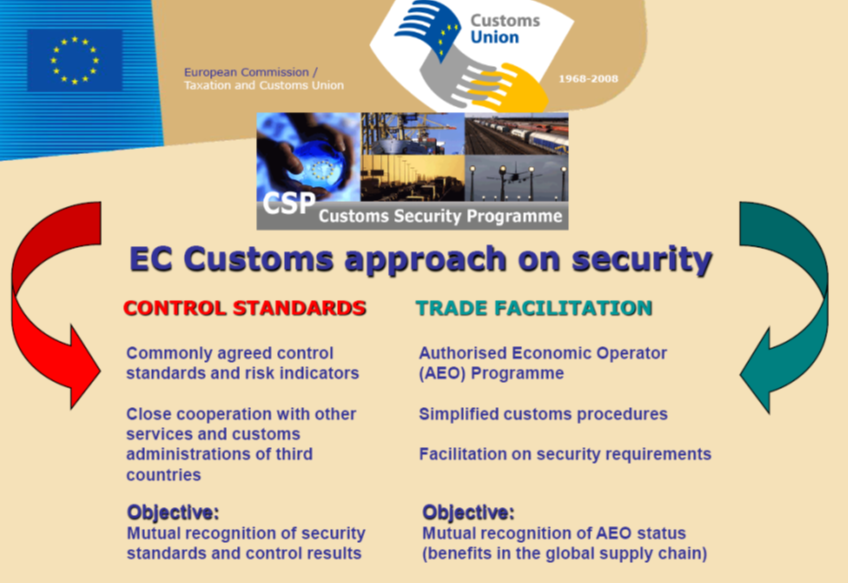
Figure 2 Source: European Commission
Air cargo security
In January 2003 the EU established common rules for civil aviation security when it brought into force Regulation (EC) No 2320/2002. The regulation prescribed the security criteria for air cargo, courier and express parcels. It covered specific security controls, the regulated agent, criteria for known consignor, and processes for all-cargo aircraft.
Commission Regulation (EC) No 831/2000, adopted on 2 June 2006 and in force from 1 January 2007, laid down more harmonized rules on air cargo security. The changes related to Regulated Agent Obligations, Security Controls, Known Consignor Qualification, Account Consignor Qualification and Transhipment Security Controls (EC 2007).
In September 2008 the EU and the United States agreed standards for air cargo screening on half of flights between their respective countries by February 2009 and on all flights by 2010. The agreement ensures that the United States and the EU use the same screening equipment, provide the same training to screeners, and impose the same security requirements for the facilities where cargo is screened (TSA 2008b). 100% screening with the United States was not achieved in 2010, although significant progress was made.
In August 2011 the EU published new rules on security measures for cargo coming from non-EU countries. The main elements of the rules, which came into effect on 1 February 2012, are:
|
1 |
Pre-flight screening Air carriers will be required to ensure that cargo either has been screened for explosives or inflammables, or comes from a trusted source, before they are allowed to fly into the EU from third countries; the carriers and trusted sources in third countries will be subject to independent validation as of 2014. |
|
2 |
Risk-based exemptions In third countries with high security standards, cargo will be exempted from these additional measures. In third countries with high risk, enhanced screening for cargo will be required by means of a combination of two or more screening measures. |
|
3 |
Transfer cargo screening Cargo being transferred from all-cargo on to passenger flights at EU airports must be screened to higher passenger flight standards before loading on to the passenger aircraft. |
6.2. Secure Trade in APEC Region (STAR)
In 2002, APEC Leaders agreed that terrorism represented a severe threat to the region, and decided that a new Secure Trade in the APEC Region (STAR) Initiative would be introduced as a matter of urgency. Over the following years APEC members have held annual STAR conferences to develop the initiative. Discussions at the STAR Conferences have focused on policies and procedures to enhance security and efficiency in the APEC region's seaports, airports and other access points, including: port and airport security; shipping container security; coastal patrol; capacity building; financial assistance; and private sector initiatives. The STAR initiative also fosters coordination between public and private entities, which is essential to counteract terrorist threats through the supply chain.
|
|
Further Reading: Australian Trusted Trader (ATTP) Program This website has been developed to generally explain the benefits of the ATTP for members and non-members. It also includes a number of Case Studies: Australian Trusted Trader |
7. Conclusion: The Roles of Customs and Industry
Customs' ability to meet the challenge
Customs administrations around the world have important powers that allow them to inspect all cargo imported and exported from a country. With this power usually comes the power to refuse entry of goods, and the power to facilitate or impede entry. Customs is also the agency to which importers and exporters provide information about their cargoes, and Customs can mandate the form in which that information is provided and the timing of its provision. It is natural, therefore, for Customs administrations to be the agency primarily tasked by governments to secure trade against the threat from international terrorism.
The SAFE Framework provides the guidelines that help WCO member administrations take on this new role, which most governments expect them to undertake. The difficulty is in ensuring that all countries involved in the supply chain can meet the standards set out in the WCO Framework. For developing countries, this challenge is significant: unless they can be seen to be adopting the international standards for supply chain security, they face the risk of becoming an unfavorable trading partner.
7.1. The challenge for all Customs administrations
The Customs role in supply chain security will see growth in capacity building for Customs administrations across the world. Customs administrations will have to work more closely together to deliver improvements in supply chain security. This involves sharing information about exported goods, undertaking cargo inspections at the point of export when the importing country has security concerns, and providing advance cargo (and passenger) information to support risk management.
To assist developing countries to meet the requirements of the WCO Framework, the WCO commenced a large-scale Customs capacity building program in 2006 called the Columbus Program. Customs development advisors from many agencies have visited over 100 countries to support Customs modernization. Multiple donors, including international organizations, private companies and Customs administrations, have contributed funding, human resources, and expertise to its implementation.
7.2. Customs partnership with business
In developing the response to the terrorist threat, it became clear at both the international and national level that Customs administrations could not deliver the necessary improvements to supply chain security on their own. More frequent and stringent inspections at the border may have eased a country's security concerns, but the impact on trade would have been significant. Customs therefore needs to partner with business to achieve the balance between facilitation and security required to keep trade flowing.
In many countries this requires a different model of partnership from the traditional trader-regulator dynamic. Customs administrations need to work with companies involved in all aspects of the supply chain, and increasingly rely on them to undertake their own self-governance. Only a strengthened relationship with business will build the trust needed to keep trade flowing in an era of heightened security.
7.3. Customs cooperation with other agencies
Since the development of the SAFE Framework of Standards in 2005, the importance of cooperation between Customs and other government and inter-government agencies involved in international trade and supply chain security has increased. The WCO has recognized this and has introduced a number of key tools and instruments. The Coordinated Border Management and Single Window Compendiums, in particular, guide cooperation between Customs and other government and inter-government agencies.
The main objective of this cooperation is to make the government response to supply chain security challenges both efficient and effective. This means avoiding duplication of requirements and inspections, streamlining processes, and working toward global standards that secure the movement of goods in a way that also facilitates trade.
Many government agencies cooperate with Customs in the area of supply chain security. Partnering agencies include, but are not limited to, transport security authorities, interior authorities (such as police), agencies operating at the border (such as agriculture), and licensing agencies (such as those for dual use goods).
7.4. The role of business in securing international trade
Unlike Customs administrations, who view their increased role in securing international trade as an extension of their historical responsibilities, the role business is expected to play is new and far more challenging. Business has been asked to support the fight against terrorism through tougher controls. Restrictions imposed in the name of security have made the movement of goods more complex.
CTPAT and other international forms of Customs-private sector partnership (such as AEO and Regulated Agent) have placed considerable additional responsibilities on companies in the supply chain. Although these programs are voluntary, companies that do not participate are at a disadvantage.
Governments have developed extensive guidelines on the security requirements expected of supply chain businesses. Individual businesses must look after their own security and must also be aware of the security standing of others in their supply chain. CTPAT publishes minimum security criteria for nine different sectors of the supply chain, including importers, carriers across all modes, brokers, manufacturers, freight consolidators, and port and terminal operators (CBP 2006b). The breadth of the list reflects the reality that supply chain security depends on every link, not just the importer.
Carriers, freight forwarders, port authorities and terminal operators are each responsible for different stages in the supply chain process. The best procedures of one trusted trading partner are meaningless if other parties in the supply chain do not have effective security procedures of their own. This is the notion of an integrated supply chain. An integrated supply chain also requires close collaboration between industry and government.
Why Participate? Incentives & Benefits
|
Why Business Participates |
What Compliant Businesses Gain |
|
• Customs clearance is the single greatest source of unpredictable supply chain delay • Logistics managers need to reduce delay risk to remain competitive • Regulatory agencies offer faster processing as an incentive for participation |
✔ Expedited Customs processing of cargo ✔ Lower transportation costs ✔ Faster movement through the supply chain ✔ Reduced risk of delay or spoilage ✔ Continued participation in international trade |
Business Must Self-Assess Security
Beyond compliance with external requirements, businesses are expected to self-assess their own security practices across two dimensions:
|
Physical Security • Facility access controls and perimeter security • Container and load integrity verification • Conveyance sealing and inspection procedures |
Personnel Security • Pre-employment screening and background checks • Ongoing training on security awareness • Controls over employee access to sensitive areas and cargo |
Companies must embrace their role in supply chain security if they are to continue to do business. The benefit of compliance is the ability to remain an active participant in international trade and, in many countries, to receive expedited processing of their goods.
8. Bibliography
n Asia Pacific Economic Co-operation (2011), Secure Trade in the APEC Region, Singapore. Available on the APEC Website - http://www.apec.org/Groups/SOM-Steering-Committee-on-Economic-and-Technical-Cooperation/Task-Groups/Counter-Terrorism-Task-Force.aspx
n Australian Government, Department of Foreign Affairs and Trade (2004), Combating Terrorism in the Transport Sector – Economic Costs and Benefits, Canberra. Available on the DFAT website - http://www.dfat.gov.au/publications/combating_terrorism/combating_terrorism.pdf
n Carluer, Frederic. 2008. Global Logistic Chain Security: Economic Impacts of the US 100% Container Scanning Law. Universite´ of Le Havre.
n Civil Aviation Department, the Government of the Hong Kong Special Administrative Region (2006) Regulated Agent Regime, Hong Kong. Available on Civil aviation Department website -
http://www.cad.gov.hk/english/rar.html
n Department of Homeland Security (2008a), Fact Sheet: New Cargo Security Requirements for Maritime Carriers and Importers, Washington. Available on the DHS website – http://www.cbp.gov/xp/cgov/newsroom/highlights/cbp_responds/container_sec_devices.xml http://www.dhs.gov/xnews/releases/pr_1227548591399.shtm
n Department of Homeland Security (2008b), Remarks by Homeland Security Secretary Michael Chertoff at Brookings on the Nation’s Critical Infrastructure, Washington. Available on the DHS website – http://www.dhs.gov/xnews/speeches/sp_1220876790967.shtm
n Department of Homeland Security (2010), Statement by Secretary Napolitano on Increased Security Measures, Washington. Available on the DHS website – http://www.dhs.gov/ynews/releases/pr_1289237893803.shtm
n Department of Homeland Security (2011), Borders and Maritime Security Projects. , Washington Available on DHS website - http://www.dhs.gov/ynews/testimony/archives/2009_decarch.shtm http://www.dhs.gov/files/programs/gc_1218476542736.shtm#10
n Ellerbeck T and Mason M (2005), Aviation Security and the Potential Terrorist Threat to Air Cargo – A Global Perspective, Centre for Defence and International Security Studies. Available on CDISS website: http://www.cdiss.org/documents/uploaded/GEA_Air_Cargo_Masterfinalfinal.pdf
n European Commission (2007), Second Report on the Implementation of Regulation (EC) No 2320/2002 on Civil Aviation Security, Brussels. Available on the European Commission website – http://eur-lex.europa.eu/Result.do?direct=yes&lang=en&where=EUROVOC:004408&whereihm=EUROVOC:civil%20aviation
n European Commission (2008), Customs and Security, Brussels. Available on the European Commission website - http://ec.europa.eu/taxation_customs/customs/policy_issues/customs_security/index_en.htm
n European Commission (2011a), Press Release: Launch of Phase 2 of the EU-China Smart and Secure Trade Lanes Project, Brussels. Available on the European Commission website - http://ec.europa.eu/taxation_customs/resources/documents/common/whats_new/pr_sstl_en.pdf
n European Commission (2011b), Progress Report regarding strengthening air cargo security, Brussels. Available on the European Commission website - http://register.consilium.europa.eu/pdf/en/11/st11/st11250.en11.pdf
n European Commission (2012a), EU-China Customs Cooperation, Brussels. Available on the European Commission website -
n European Commission (2012b), EU-US security agreement allows cheaper and faster air cargo operations, Brussels. Available on the European Commission website -
n http://europa.eu/rapid/press-release_MEMO-12-400_en.htm?locale=en
n European Union (2008), Press Release: US Customs And Border Protection And European Commission Adopt Joint Roadmap Towards Mutual Recognition Of Trade Partnership Programs, Brussels. Available on the European Commission website - <http://www.eurunion.org/eu/index.php?option=com_content&task=view&id=1719&Itemid=58>
n European Union (2010), Press Release: Commissioner Šemeta visits China to boost cooperation in custom controls and tackling counterfeit goods, Brussels. Available on the European Commission website - http://europa.eu/rapid/pressReleasesAction.do?reference=IP/10/1079&format=HTML&aged=0&language=EN&guiLanguage=en
n Fletcher T (2006), The Benefits of Investing in Supply Chain Security: The IBM Experience, Submitted to the APEC Total Supply Chain Security Symposium Singapore July 2006, Singapore. Available on the APEC website - http://www.apec.org/apec/documents_reports/counter_terrorism_task_force/2006.html
n Fried B (2006), Security, Forwarders Forum Air Cargo World Online, Available on Air Cargo World Online website - http://www.aircargoworld.com/departments/opinion_comment/forum_0706.htm
n House of Lords - European Union Committee (2005), After Madrid: The EU's Response to Terrorism, Report with Evidence. HL 35, 5th Report of Session 2004-05. Available on the United Kingdom Parliament website: http://www.publications.parliament.uk/pa/ld200405/ldselect/ldeucom/53/5302.htm
n Homeland Security New Wire (2011), U.S. no longer mandating 100 percent screening of cargo containers, Online Article 24 June 2011, viewed 23 January 2012. Available on ICAO website at - http://www.homelandsecuritynewswire.com/us-no-longer-mandating-100-percent-screening-cargo-containers
n International Civil Aviation Organization 2006, Review Of The Global And Regional AVSEC Developments And Activities, July 2006, Montreal. Available on ICAO website at - http://www.icao.int/icao/en/ro/nacc/meetings/2006/30ECARWG/30ECARWGwp11.pdf
n International Civil Aviation Organization 2010, ICAO Strengthens Air Cargo Security Measures – Press Release 17 November 2010, Montreal. Available on ICAO website at - http://www2.icao.int/en/NewsRoom/Lists/News/DispForm.aspx?ID=1&Source=http%3A%2F%2Fwww2.icao.int%2Fen%2Fnewsroom%2Fdefault.aspx
n International Civil Aviation Organization (2011a), ICAO Aviation Security Programme, Montreal. Available on ICAO website at - http://www2.icao.int/en/avsec/Pages/default.aspx
n International Civil Aviation Organization (2011b), ICAO and WCO Join Forces to Strengthen Air Cargo Security – Press Release 27 June 2011, Montreal. Available on ICAO website at - http://www.icao.int/Newsroom/Pages/icao-and-wco-join-forces-to-strengthen-air-cargo-security.aspx
n International Maritime Organization (2005), Secretary General Press Briefing February 2005, London. Available on the IMO website - http://www.imo.org/About/mainframe.asp?topic_id=1018&doc_id=4708
n International Maritime Organization (2006), Maritime Security, London. Available on the IMO website - http://www.imo.org/home.asp
n Konkel T (2005), Container Security: Preventing a Nuclear Catastrophe, The Journal of International Policy Solutions Volume 3 Spring 2005, University of California San Diego, San Diego Available on the UCSD website - http://irps.ucsd.edu/assets/004/5372.pdf
n Kommerskollegium (Swedish National Board of Trade) 2008, Supply chain security initiatives: a trade facilitation perspective, Stockholm, Sweden. Available on the Kommerskollegium website: http://www.kommers.se/upload/Analysarkiv/In%20English/Trade%20facilitation/Report%20Supply%20Chain%20Security%20Initiatives.pdf
n Logistics Slip Sheets, Congress delays implementation of container scanning requirement. Online Article 2 July 2012, viewed 23 January 2013. Available on Logistics Slip Sheets website at - http://logisticsslipsheet.wordpress.com/2012/07/02/congress-delays-implementation-of-container-scanning-requirement-2/
n Transport Security Administration (2006 a), Aviation and Transportation Security Act, Washington: Available on TSA website http://www.tsa.gov/assets/pdf/Aviation_and_Transportation_Security_Act_ATSA_Public_Law_107_1771.pdf ';
n Transportation Security Administration (2006 b), Air Cargo Strategic Plan, November 17, 2001. Available on TSA website http://www.tsa.gov/public/display?content=0900051980069bfe&print=yes
n Transportation Security Administration (2006 c), Press Release: TSA Issues New Regulations to Substantially Strengthen Air Cargo Security, Washington Available on TSA website - http://www.tsa.gov/press/releases/2006/press_release_0671.shtm
n Transportation Security Administration (2008a), John Sammon, Assistant Administrator, Oral Testimony on Air Cargo before the House Subcommittee on Transportation and Infrastructure Protection, Washington Available on TSA website - http://www.tsa.gov/press/speeches/071508_sammon_air_cargo.shtm
n Transportation Security Administration (2008b), US EU - Joint Statement of Purpose on Co-ordination of Efforts to Enhance Air Cargo Security –, Washington. Available on TSA website - http://www.tsa.gov/assets/pdf/eu_us_enhancing_air_cargo_security.pdf
n Transportation Security Administration (2010), Press Release: TSA Announces Key Milestone in Cargo Screening on Passenger Aircraft, Washington Available on TSA website - http://www.tsa.gov/press/releases/2010/0802.shtm
n University of Virginia (2010), Customs-Trade Partnership Against Terrorism (C-TPAT): 2010 Partner Survey - Report of Results 2010 – Prepared for USCBP, Washington. Available on the CBP website: http://cbp.gov/linkhandler/cgov/trade/cargo_security/ctpat/ctpat_survey.ctt/ctpat_survey.pdf
n U.S. Customs and Border Protection (2007 a), Remarks by CBP Commissioner W. Ralph Basham on Container Security at the Centre for Strategic and International Studies, Washington. Available on the CBP website: http://www.cbp.gov/xp/cgov/newsroom/commissioner/speeches_statements/commish_remarks_csc.xml
n U.S. Customs and Border Protection (2007 b), C-TPAT Overview, Washington Available on the CBP website: http://www.cbp.gov/xp/cgov/trade/cargo_security/ctpat/what_ctpat/ctpat_overview.xml
n U.S. Customs and Border Protection (2008a), Written Statement of Deputy Commissioner Jayson Ahern U.S. Customs and Border Protection- Senate Committee on Commerce, Science, and Transportation, Subcommittee on Surface Transportation and Merchant Marine Infrastructure, Safety, and Security, Washington. Available on the CBP website – http://www.cbp.gov/xp/cgov/newsroom/congressional_test/pilot_ports.xml
n U.S. Customs and Border Protection (2008b), CSI in Brief, Washington. Available on the CBP website - http://www.cbp.gov/xp/cgov/trade/cargo_security/csi/csi_in_brief.xml
n U.S. Customs and Border Protection (2008c), C-TPAT – A Guide to Program Benefits, Washington. Available on the CBP website - http://www.cbp.gov/xp/cgov/trade/cargo_security/csi/csi_in_brief.xml http://www.cbp.gov/linkhandler/cgov/trade/cargo_security/ctpat/ctpat_benefits.ctt/ctpat_benefits.pdf
n U.S. Customs and Border Protection (2008d), Inspection Technology Fact Sheet, Washington. Available on the CBP website – <http://www.cbp.gov/linkhandler/cgov/newsroom/fact_sheets/port_security/technology.ctt/technology.pdf>
n U.S. Customs and Border Protection (2010a), Fiscal Year 2010, Report to Congress – Risk-Based, Layered Approach to Supply Chain Security, Washington.
n U.S. Customs and Border Protection (2010b), Fact Sheet – Secure Freight Inspection Technology, Washington. Available on the CBP website – http://www.cbp.gov/linkhandler/cgov/newsroom/fact_sheets/trade_security/sfi/sfi_technology.ctt/sfi_technology.pdf
n U.S. Customs and Border Protection (2011a), CSI in Brief, Washington. Available on the CBP website - http://www.cbp.gov/xp/cgov/trade/cargo_security/csi/csi_in_brief.xml
n U.S. Customs and Border Protection (2011b), U.S. Customs and Border Protection (CBP) Fiscal Year 2010 Annual Financial Report, Washington. Available on the CBP website - http://www.cbp.gov/linkhandler/cgov/newsroom/publications/admin/fy2010_report.ctt/fy2010_report.pdf
n U.S. Customs and Border Protection (2012a), CBP is expanding participation in ACAS, Washington. Available on the CBP website - http://www.cbp.gov/xp/cgov/newsroom/news_releases/national/10242012_3.xml
n U.S. Customs and Border Protection (2012b), CBP, Taiwan AEO Agree to Cargo Security Program Standards, Washington. Available on the CBP website – http://www.cbp.gov/xp/cgov/newsroom/news_releases/national/11272012_5.xml
n U.S. Customs and Border Protection (2013), C-TPAT Conference Draws Record Numbers, Washington. Available on the CBP website - http://www.cbp.gov/xp/cgov/newsroom/highlights/ctpat_record_numbers.xml
n U.S. Government Accountability Office (2008a), Supply Chain Security - U.S. Customs and Border Protection Has Enhanced Its Partnership with Import Trade Sectors, but Challenges Remain in Verifying Security Practices, Washington. Available on GAO website - http://www.gao.gov/products/GAO-08-240
n U.S. Government Accountability Office (2008b), Supply Chain Security: Challenges to Scanning 100 Percent of U.S.-Bound Cargo, Washington. Available on GAO website - http://www.gao.gov/products/GAO-08-533T
n U.S. Government Accountability Office (2010a), Supply Chain Security: Challenges to Scanning 100 Percent of U.S.-Bound Cargo, Washington. Available on GAO website - http://www.gao.gov/products/GAO-08-533T
n U.S. Government Accountability Office (2010b), Supply Chain Security: Importer Security Filing, Washington. Available on GAO website - http://www.gao.gov/products/GAO-10-841
n U.S. House of Representatives Committee on Homeland Security (2008), Letter -Homeland Security Democrats to TSA: The 100% Screening Air Cargo Law Means All Cargo Must Be Screened, Washington. Available on House of Representatives website -
n Wilkinson P (2007), The Challenge of International Terrorism and its implications for the Rule of Law and Human Rights - Commonwealth Ministers Reference Book 2007, St Andrews. Available on the Centre for the Study of Terrorism and Political Violence website - http://www.st-andrews.ac.uk/~cstpv/
n World Bank (2003), Global Economic Prospects 2004: Realizing the Development Promise of the Doha Agenda. Available on the World Bank website: http://publications.worldbank.org/ecommerce/catalog/product?item_id=2581204
n World Customs Organization (2012a), Framework of Standards to Secure and Facilitate Global Trade. Brussels. Available on the WCO website – http://www.wcoomd.org/en/topics/facilitation/instrument-and-tools/~/~/media/55F00628A9F94827B58ECA90C0F84F7F.ashx
n World Customs Organization (2012b), WCO Research Paper No. 25 - Compendium of Authorized Economic Operator Programmes – 2012 Edition. Brussels. Available on the WCO website –http://www.wcoomd.org/en/topics/research/activities-and-programmes/~/media/930340C77B3740D6B3894F747AF6A7FF.ashx
n World Shipping Council (2008), Statement before the House Homeland Security Appropriations Subcommittee - “Container, Cargo and Supply Chain Security – Challenges and Opportunities.” , Washington. Available on the WSC website