Study Guide
| Site: | Centre for Customs and Excise Studies |
| Course: | DHL International Customs Program 2026: Cohort 1 |
| Book: | Study Guide |
| Printed by: | Guest user |
| Date: | Saturday, 17 October 2026, 3:33 AM |
Table of contents
- 1. Introduction
- 2. E-Commerce
- 2.1. Definition
- 2.2. Current and the emerging landscape
- 2.3. Models
- 2.4. DHL global support for E-commerce clients
- 2.5. Key players
- 2.6. Custom-related challenges
- 2.7. De Minimis
- 2.8. Smuggling of illicit goods
- 2.9. Stakeholder engagement
- 2.10. Adapting to new business models
- 2.11. WCO Framework of Standards on cross-border -commerce
- 2.12. Summary
- 3. Green Customs
- 3.1. Definition
- 3.2. Institutional framework and initiatives
- 3.3. Multilateral Environmental Agreements (MEAs)
- 3.4. Country and regional initiatives
- 3.5. European Union (DG TAXUD)
- 3.6. Climate-related trade measures
- 3.7. Internal customs green practices
- 3.8. Impacts on human rights and forced labor
- 3.9. Impacts of deforestation
- 3.10. Summary
- 4. Disruptive customs technologies and automation
- 5. Integrity
1. Introduction
This module examines the major trends reshaping the global customs landscape: E‑Commerce, Green Customs, Disruptive Technologies, and Integrity. Trade is accelerating, supply chains are more complex, and governments demand smarter, more resilient borders. Digitalization, environmental pressures, and rapid innovation are transforming customs and raising expectations across the sector.
|
01 E-Commerce Surging low-value parcels overwhelm traditional systems, pushing customs to modernize risk management, strengthen data use, and work closely with platforms, couriers, and postal operators. |
02 Green Customs Officers enforce environmental agreements, intercept illegal waste shipments, and support emerging climate-related measures such as carbon border adjustments. |
|
03 Disruptive technologies AI, blockchain, IoT devices, and advanced analytics are moving from pilot projects into daily operations, improving image analysis, document integrity, and cargo visibility. These tools offer significant benefits but require new skills, new regulatory approaches, and new operational models. |
04 Integrity As processes digitalize and decisions become more data-driven, integrity is essential: transparency and accountability sustain trust, and ethical conduct underpins every function. The Revised Arusha Declaration continues to guide administrations in strengthening integrity across all functions. |
These areas illustrate the evolving role of customs in a fast-changing trade environment, calling for innovation, continuous reform, and the importance of global cooperation between Customs and the international trading community.
2. E-Commerce
E-commerce, short for electronic commerce, is the buying and selling of goods and services over the internet. Although its origins trace back to the 1970s with the development of Electronic Data Interchange (EDI), it surged in the 1990s with the rise of platforms such as Amazon and eBay. Since then, it has become a transformative force in global trade, offering unprecedented convenience, reach, and speed.
Today, e-commerce accounts for trillions of dollars in annual sales. Its continued growth benefits consumers and businesses but also presents significant challenges for customs authorities, particularly in revenue collection, risk management, data quality, and trade facilitation. The rapid increase in low-value, high-volume consignments has placed sustained pressure on border processes and regulatory frameworks.
The World Customs Organization (WCO) plays a central role in coordinating global efforts to manage e-commerce, reduce associated risks, and promote harmonized approaches through standards, guidance, and multi-stakeholder cooperation.
2.1. Definition
There is no single universal definition of e‑commerce. For the purposes of this module, we define it as:
|
The buying or selling of goods and services via the internet. |
When these transactions cross national borders, they are classified as cross‑border e‑commerce. International organizations and national administrations use definitions that emphasize elements such as the use of information and communication technologies, the internet as the medium for initiating transactions, the cross‑border movement of goods between economies, and the use of electronic payment or ordering systems. Examples include:
|
Source |
Definition of e-commerce |
|
DHL |
“the buying and selling of goods and services over the internet”, highlighting its global reach and 24/7 accessibility (DHL: What is E-Commerce). |
|
WTO Work Program on E-Commerce |
“the production, distribution, marketing, sale or delivery of goods and services by electronic means.” |
|
OECD |
“the sale or purchase of goods or services, conducted over computer networks by methods specifically designed for the purpose of receiving or placing orders.” |
|
WCO (cross-border e-commerce) |
• online ordering, sale, communication and, where applicable, payment, • cross-border transactions or shipment of physical (tangible) goods, and • goods destined for consumers or buyers (commercial or non-commercial). |
These definitions reflect the broad scope of e‑commerce and how it spans digital platforms, logistics networks, payment systems, and the physical movement of goods across borders.
2.2. Current and the emerging landscape
The landscape of e-commerce is both fast-moving and complex. There is a major shift in buying patterns, increasing demands from industry and consumers for rapid delivery of consignments driven by widespread internet access, smartphone proliferation, a growing middle class in emerging economies and demand for fast, low-cost delivery. E-commerce expanded rapidly during the COVID-19 pandemic, and many of the behavioral and business model shifts established during that period have now become permanent. At the same time, this is adding new vulnerabilities in the E-Commerce supply chain, including:
- Explosion of low-value shipments
- Non-traditional supply chains (individual sellers, small logistics providers, e-commerce platforms)
- Complex regulatory challenges
- Increase in direct-to-consumer cross-border sales
- Use of automated warehouses and AI-powered marketing.
To address these pressures, many administrations are now strengthening requirements for advanced electronic data and placing greater accountability on e-commerce platforms. Accurate, structured data is becoming essential for identifying high-risk consignments, improving targeting, and ensuring fair and efficient revenue collection.
E-Commerce, in particular Business-to-Consumer (B2C) and Consumer-to-Consumer (C2C) transactions, is presenting new challenges to governments and businesses alike. This fast-evolving trading environment requires comprehensive and well-considered solutions from all stakeholders, including customs authorities, to manage:
- Growing volumes
- Increased compliance complexity
- Greater opportunity for fraudulent declarations
- Illicit goods moving through fragmented supply chains
- Loss of tax revenue due to under-reporting and abuse of de minimis thresholds.
The WCO recognizes that cross‑border e‑commerce affects all countries and requires a globally coordinated, inclusive, and collaborative approach. Governments and the private sector must work together to facilitate legitimate trade, ensure fair revenue collection, and protect communities.
|
DHL notes: “By 2024, an estimated 2.71 billion people — over a third of the global population — will shop online. E‑commerce sales are set to exceed $6.3 trillion this year, with projections reaching $8 trillion by 2027, driven by growing internet accessibility and smartphone adoption.” DHL also states: “In 2024, it’s expected to account for 20.1% of all retail sales; by 2027, that figure will rise to 22.6%.” (DHL: What is E-Commerce). |
DHL highlights that agile supply chains are central to modern e‑commerce success, enabling businesses to respond quickly to demand fluctuations, global disruptions, and rising customer expectations for speed and flexibility. DHL emphasizes that in today’s volatile environment, agility has become a competitive necessity. (Agile Supply Chain: The Key to Meeting E-commerce Demands | DHL Global.)
Marketing professional David M. Gligor, PhD[1], identified five key dimensions that define supply chain agility, each critical to navigating uncertainty and driving performance:
|
01 Alertness The ability to detect changes, opportunities, and threats early by listening to customers and exchanging timely information with suppliers. |
02 Accessibility Seamless access to relevant supply chain data that informs rapid and effective decision-making. |
|
03 Decisiveness The capacity to make resolute decisions in response to emerging challenges or opportunities. |
04 Speed Swift execution of chosen actions to maintain momentum and meet customer expectations. |
|
05 Flexibility The ability to adapt operations, scale services, and pivot across markets to seize new opportunities or mitigate disruptions. |
|
Together, these dimensions form the backbone of DHL’s agile logistics strategy, empowering businesses to remain resilient, responsive, and customer-centric in a fast-moving digital economy, including:
- Implement demand forecasting tools to anticipate surges
- Use Order & Warehouse Management Systems for real-time control
- Partner with 3PLs like DHL for global reach and disruption resilience
- Distribute inventory across regional hubs to reduce delivery times
- Maintain supplier diversity to avoid single-point failures.
DHL has partnered with Everstream Analytics®, an alliance that leverages real-time risk intelligence and predictive analytics, enhancing DHL’s ability to pre-empt disruptions and guide clients through volatile scenarios. By integrating Everstream’s tools into its logistics ecosystem, DHL supports:
|
01 Risk anticipation Identification of potential supply chain threats before they escalate. |
02 Operational continuity Maintenance of services despite adverse conditions, such as geopolitical instability or environmental events. |
03 Decision optimization Data-driven insights improve the speed and quality of strategic choices. |
[1] Gligor, D. M. (2016). The Role of Supply Chain Agility in Achieving Supply Chain Fit. Decision Sciences, 47(3), 524–553. https://doi.org/10.1111/deci.12205
2.3. Models
The WCO Framework of Standards focuses on Business‑to‑Consumer (B2C), Business‑to‑Business (B2B), and Consumer‑to‑Consumer (C2C) transactions. However, other e‑commerce models are also recognized. For example, DHL identifies eight different models (What is E-commerce: Definition and Types | DHL Global), including Consumer‑to‑Business (C2B), Business‑to‑Government (B2G), Consumer‑to‑Government (C2G), Government‑to‑Business (G2B), and Government‑to‑Consumer (G2C). These models differ based on the relationship between the buyer and seller in online transactions. Below is a more detailed breakdown.
|
Model |
Description |
Examples |
|
Business-to-Consumer (B2C) |
The most common e-commerce model, where businesses sell products or services directly to individual consumers. These transactions typically involve high-volume, low-value shipments, which are central to cross-border e-commerce growth. |
• An online shoe store selling sneakers for personal use • Amazon selling directly to individuals • Walmart selling products through its website |
|
Business-to-Business (B2B) |
Businesses sell goods or services to other businesses, often involving raw materials, components, or wholesale goods. These transactions usually require more formal customs procedures and higher-value declarations. Some B2B transactions ultimately support B2C sales (B2B → B2C). |
• Slack selling communication services to other businesses • A company providing raw materials to a manufacturer |
|
Consumer-to-Consumer (C2C) |
Online transactions between individual consumers. While often informal, C2C trade has grown significantly due to digital platforms and social commerce. These transactions are typically facilitated by a third-party platform. |
• An individual selling a used book on eBay • A user selling their old phone on Facebook Marketplace |
|
Consumer-to-Business (C2B) |
Individuals offer products or services to businesses. This includes freelance work, digital content, and user-generated products. |
• A freelance graphic designer offering services to a company • A photographer selling images to a stock photo website |
|
Business-to-Government (B2G) |
Businesses sell products or services to government agencies or public entities. These transactions typically involve formal procurement processes and strict compliance requirements. |
• Software and hardware • Consulting services • Specialized equipment |
|
Consumer-to-Government (C2G) |
Individuals provide goods or services to government agencies. While less common, this can include specialized skills or niche services offered through digital platforms. |
Specialized skills or niche services offered through digital platforms. |
|
Government-to-Business (G2B) |
Governments sell products, data, or services directly to businesses, often through online portals or digital platforms. |
Government agencies providing access to datasets or regulatory services. |
|
Government-to-Consumer (G2C) |
Governments provide services directly to citizens online. These are typically service-based rather than goods-based transactions. |
• Tax filings • License renewals • Applications for government services |
|
Note For the purposes of this module, our focus is on the sale of goods rather than services. |
2.4. DHL global support for E-commerce clients
DHL invests heavily in helping clients access global e‑commerce markets. It publishes an annual E-Commerce Trends Report, provides an International Shipping Guide for E-commerce, and offers Global Customs Guidelines to help customers prepare accurate customs declarations.
Across these guides, DHL consistently highlights that regulatory authorities worldwide are moving toward fully data‑driven, digital clearance environments for efficient, risk‑based processing. DHL emphasizes the importance of providing complete and accurate Commercial or Proforma Invoice data electronically to DHL Express, early in the supply chain, which enables:
- Accurate customs declarations with minimal human intervention
- Faster, automated clearance for exports and imports
- Clearance prior to arrival
- Improved compliance
- Earlier risk assessment, including dangerous goods identification
2.5. Key players
E‑commerce’s success and complexity come from the interaction of many stakeholders: sellers and vendors, platforms and marketplaces, buyers/consumers, brokers, express carriers, logistics providers, postal operators, and payment service providers.
Customs and border administrations are not traditional e‑commerce players, but they are essential to the ecosystem. They facilitate cross‑border trade by ensuring the secure, efficient movement of goods, managing regulatory compliance, collecting duties and taxes, and protecting borders from prohibited or high‑risk items.
|
Player type |
Example |
Role |
|
Customs and border administrations |
Not a traditional e-commerce player, but essential to the ecosystem |
Facilitate cross-border trade by ensuring the secure and efficient movement of goods, managing regulatory compliance, collecting duties and taxes, and protecting borders from prohibited or high-risk items. |
|
Express industry |
DHL, FedEx, UPS |
A critical component of global e-commerce; a key enabler of customer expectations for speed, predictability, and end-to-end visibility as demand for fast, reliable delivery rises. |
|
Major e-commerce platforms |
Amazon, Alibaba, eBay, Temu, Shein, Tokopedia |
Dominant players offering access to global markets and handling a substantial share of cross-border transactions. |
|
Specialized marketplaces |
Etsy (handmade and vintage goods); region-focused platforms such as JD.com and AliExpress |
Cater to specific markets or product categories. |
|
Logistics and freight operators |
Global: DHL, FedEx, UPS; regional: COSCO Shipping, Kerry Logistics, SF Express |
Support international shipping and freight movement, including tailored solutions for niche requirements such as cold-chain logistics for perishable goods or specialized fulfillment for high-value items. |
|
Payment service providers |
PayPal, Stripe, Adyen, and other payment gateways |
Enable secure, convenient international transactions and support multiple currencies and compliance requirements. |
|
Customs brokers |
International shippers, express carriers, and specialist brokerage firms |
Assist businesses in navigating customs regulations, documentation, and clearance procedures. |
|
Fulfillment and warehousing providers |
ShipBob, Rakuten Super Logistics, Flexport |
Provide warehousing, order fulfillment, and last-mile delivery services, supporting merchants who require scalable logistics solutions. |
|
Technology providers |
ChannelAdvisor, ESW, Shopify’s cross-border tools |
Offer e-commerce enablement platforms, helping businesses manage listings, pricing, compliance, and international expansion. |
2.6. Custom-related challenges
Cross‑border e‑commerce presents challenges for traders and service providers, including navigating diverse international regulations, managing increasingly complex shipping logistics, and adapting to rapidly evolving markets. Additional hurdles include regulatory complexity, cybersecurity risks, language barriers, multi‑currency payments, and data protection.
From a regulatory perspective, the surge in low‑value shipments requires customs administrations to maintain efficient clearance processes while ensuring security and accurate revenue collection. High‑quality electronic data is essential.
To effectively manage e‑commerce transactions, customs and border administrations must engage with all relevant stakeholders to collectively define appropriate approaches that balance trade facilitation with enforcement. Collaboration across the ecosystem is critical.
The growing volume of shipments affects Customs, other government agencies, and private‑sector actors, all of whom must balance rapid clearance with safety, security, revenue collection, and accurate trade statistics. Traditional risks such as illicit trade, IPR infringements, counterfeiting, and commercial fraud remain significant. These issues must be addressed not only by Customs but also by service providers such as DHL, who have a vested interest in ensuring that transactions moving through their networks are legitimate. Below are examples of key regulatory challenges:
1. Increased volume & complexity |
||
|
Traditional systems were never designed for hundreds of thousands of low-value packages arriving every day. To cope at that scale, authorities and logistics providers are working to:
|
||
|
|
2. Data quality and management |
|
|
|
Accurate, complete data drives effective risk assessment, revenue collection, and compliance monitoring. Administrations increasingly lean on advanced analytics, machine learning, and data validation to support automated processing and risk-based decisions, making full use of existing and emerging technologies. |
|
|
|
3. Risk management |
|
|
|
Identifying and mitigating risks related to revenue, illicit trade, IPR infringement, and safety/security is harder in e-commerce because Customs often knows little about importers, sellers, and the wider supply chain. The rise of occasional shippers, micro-sellers, and new classes of online traders adds to the challenge. Seller-provided data (product descriptions, values, HS codes) is frequently incomplete, vague, or incorrect, which directly undermines:
|
|
|
|
4. Revenue collection |
|
|
|
Many low-value imports fall below de minimis thresholds, which makes calculating and collecting duties and taxes genuinely complex. Four tactics account for most revenue leakage:
Effective measures are required to ensure that customs duties, GST/VAT, and other taxes are collected accurately, preventing revenue leakage and ensuring fair competition for domestic businesses.
|
|
2.7. De Minimis
De minimis rules have long smoothed cross-border e-commerce by cutting costs and simplifying imports for low-value goods. Lower de minimis thresholds mean more goods become subject to duties and taxes, potentially increasing the cost of imported items and influencing e commerce pricing and consumer behavior.
The de minimis threshold, and how it is calculated, is set nationally. Some administrations use different thresholds for customs duties and domestic taxes (GST/VAT); others set separate, usually higher, thresholds for categories such as personal gifts.
|
Example: New Zealand In New Zealand, goods valued at NZD $1,000 or less are generally not assessed for customs duties or GST at the border. For most low‑value goods, GST is instead collected at the point of sale from offshore suppliers registered under New Zealand’s remote‑services and low‑value‑goods rules. |
The Global Express Association (GEA) maintains a worldwide overview of de minimis regimes (Global Express Association: Overview of de minimis value regimes worldwide). The rapid growth of online shopping has led to a dramatic increase in shipments falling under de minimis thresholds, prompting many governments to review their policies and are now reducing or eliminating their de minimis thresholds, signaling a global trend toward taxing a greater proportion of low‑value goods (Forward2me De Minimis Thresholds by Country 2025 ). The concerns driving this trend are consistent: revenue loss, competitive imbalance between domestic and foreign sellers, and misuse of the rules to avoid duties and taxes.
Countries that have recently tightened de minimis rules
|
Country / Region |
Previous threshold |
Current status |
Key change |
|
United States |
US$800 |
Abolished from 29 Aug 2025 |
All goods dutiable at standard rates, regardless of value |
|
European Union |
€22 VAT / €150 duty |
Duty exemption abolished from 1 Jul 2026 |
€3 flat-rate duty per parcel during transition; all goods ultimately dutiable |
|
Australia |
A$1,000 |
GST applies to all low-value goods |
Offshore sellers must register and collect GST |
|
India |
₹10,000 |
Duties apply to nearly all imports |
De facto elimination of de minimis |
|
Russia |
€200 / month |
Strict enforcement |
Frequent seizures of undervalued packages |
|
Indonesia |
US$3 |
Among the lowest globally |
Most imports taxed regardless of value |
|
Turkey |
€22 |
Very low threshold maintained |
Broad application of duties and VAT |
|
South Korea |
US$150 |
Drops to US$100 if shipped from the US |
Many exclusions apply |
|
New Zealand |
NZ$1,000 |
Border threshold unchanged |
GST collected at point of sale for most low-value goods; review under way |
2.8. Smuggling of illicit goods
E-commerce has reshaped smuggling by opening new distribution routes and enabling transactions with a lower risk of detection. Criminal networks exploit online platforms, social-commerce channels, and global delivery services to move goods such as:
- Counterfeit goods
- Weapons, narcotics, and wildlife products
- Dual-use or restricted technologies
|
⚠️ Why e-commerce is an attractive channel |
|
Criminals take advantage of several structural weaknesses:
|
The combination of low-value shipments, inconsistent data, and rapid fulfillment makes e-commerce attractive for illicit trade. In response, Customs and express carriers are sharpening their focus on:
- Pre-arrival data analytics
- AI-supported risk profiling
- Enhanced cooperation with platforms and payment providers
- Targeting high-risk sellers and repeat offenders
2.9. Stakeholder engagement
The rapidly evolving cross-border e-commerce environment requires strengthening existing cooperation and partnerships, as well as forging new ones with emerging participants in the e-commerce supply chain, to address associated challenges in a coordinated and collaborative manner.
Cooperation between customs administrations and other relevant government agencies is particularly important for identifying and interdicting illicit or non-compliant goods moving through e-commerce channels. Access to timely and accurate information enables Customs to focus resources on the highest-risk shipments while facilitating the rapid release of low-risk consignments. This is increasingly supported through enhanced international cooperation and the establishment of mutual legal assistance arrangements that allow for joint enforcement initiatives, investigations, or prosecutions — especially when websites, platforms, or sellers operate outside a national jurisdiction.
|
Note When appropriate, customs administrations should also share relevant intelligence and data, with trusted e-commerce stakeholders to strengthen public–private sector targeting efforts. Effective collaboration with platforms, express carriers, postal operators, and payment service providers helps improve risk identification, disrupt illicit networks, and support compliant trade. |
2.10. Adapting to new business models
The rapid evolution of e-commerce has required customs administrations to be flexible, innovative, and responsive to new business models. Customs authorities are increasingly adapting their processes, technologies, and partnerships to keep pace with the changing landscape. Examples include:
|
Approach |
Examples |
|
Digital tools and automation |
• Adopting the use of AI and machine learning for risk profiling • Implementing blockchain and distributed ledger technologies in supply chains • Automating document verification and expanding self-service digital channels for traders • Using image analytics to support non-intrusive inspection (NII) systems |
|
Risk-based compliance |
• Focusing resources on high-risk shipments and high-risk sellers • Using advanced analytics for targeted inspections • Leveraging pre-arrival data to enable earlier intervention • Applying differentiated controls for trusted traders and platforms |
|
Strategic partnerships |
• Establishing Memoranda of Understanding (MoUs) with e-commerce platforms, express carriers, postal operators, and fintech providers • Integrating systems with logistics providers and payment platforms to improve data quality • Participating in joint enforcement operations with domestic and international partners |
|
Legal and regulatory updates |
• Adjusting national customs laws to address low-value shipments, marketplace liability, and new fulfillment models • Mandating Electronic Advance Data (EAD) submission for all parcels • Updating rules on valuation, classification, and origin for e-commerce transactions • Introducing or tightening de minimis thresholds |
|
Intelligence sharing |
• Engaging with international organizations (e.g., WCO, Interpol, Europol, OECD) • Creating databases of repeat offenders, high-risk sellers, and risky commodities • Sharing intelligence with trusted private-sector partners to improve targeting • Participating in regional information-sharing networks to track illicit flows |
2.11. WCO Framework of Standards on cross-border -commerce
The WCO Framework of Standards (FoS) provides a set of global standards, principles, and guidelines to help customs administrations manage the opportunities and challenges associated with e-commerce. Key principles include:
|
Key principle |
What it involves |
|
Advance Electronic Data (AED) |
Require shipment data prior to arrival to support pre-arrival processing and risk assessment |
|
Simplified Clearance |
Streamline procedures for low-risk, small-parcel shipments |
|
Revenue Collection |
Ensure fair and efficient assessment of duties and taxes, regardless of parcel value |
|
Risk Management |
Use analytics, targeting, and technology to enable smarter, more effective enforcement |
|
Stakeholder Engagement |
Strengthening cooperation between Customs, the private sector, and other regulatory agencies |
The Framework is voluntary but has been widely adopted, and many administrations are implementing its standards through national reforms, pilot programs, and public–private partnerships. It has become a key reference point for shaping global norms and expectations for customs behavior in the e-commerce environment.
2.12. Summary
E-commerce continues to transform global trade. While it offers significant benefits to businesses and consumers, it also places unprecedented demands on customs systems and processes. Key themes include:
- Automation and digitization are essential
- Low-value shipments complicate enforcement and revenue collection
- Cooperation among stakeholders is critical
- Risk-based, data-driven strategies must replace manual processes
- Global frameworks such as the WCO FoS help harmonize responses
Customs administrations that invest in technology, skills, and partnerships will be best positioned to manage risks and facilitate legitimate trade. Logistics providers such as DHL that demonstrate strong compliance through effective systems, procedures, and staff training will be recognized as lower-risk partners.
3. Green Customs
Illegal trade in environmentally sensitive goods, such as hazardous waste, endangered species, ozone-depleting substances, and other regulated commodities, is not new, but it has grown in scale and sophistication as trade volumes and supply-chain complexity have risen. As environmental pressure increases, customs sits at the point where trade policy meets environmental enforcement.
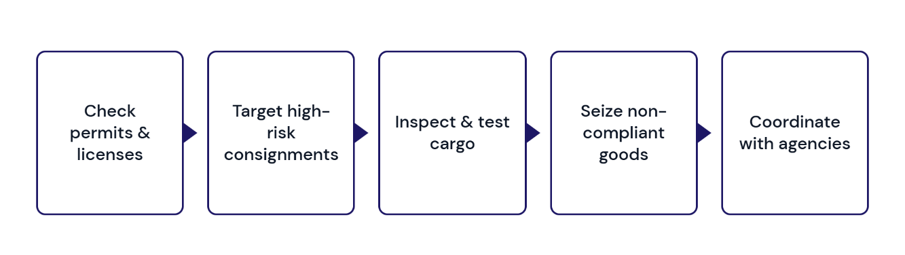
Green Customs is the integration of environmental controls into everyday customs operations. Administrations that once focused mainly on revenue collection and trade facilitation now enforce environmental rules at the border, protect ecosystems, and support climate and biodiversity commitments. In practice, customs officers play a critical role as the first line of defense against illegal or harmful environmental trade, with the authority to:
- Stop illegal movements of hazardous waste, endangered species, ozone-depleting substances, and other regulated goods
- Enforce compliance with multilateral environmental agreements (MEAs)
- Facilitate trade in low-emission goods, sustainable products, and environmentally sound technologies
This shift is part of a wider effort to green supply chains, cut the environmental footprint of cross-border trade, and align border management with climate policy. Logistics providers are central to it: administrations set the rules, but carriers, forwarders, and platforms move the goods and feed the compliance systems. Their documentation, data, and transport choices directly affect how well environmental controls work.
|
Note "Green Customs" covers two related jobs: enforcing environmental law by stopping illegal or non-compliant goods and enabling green trade by clearing sustainable goods efficiently. The discipline is as much about facilitation as it is about interdiction. |
3.1. Definition
The United Nations Environment Programme (UNEP) and the Green Customs Initiative (GCI) define Green Customs as the work customs administrations do to enforce environmental laws, prevent illegal trade in environmentally sensitive goods, and support sustainable trade. It aligns customs practice with the major MEAs and with global agendas on climate change, biodiversity, hazardous waste, and ozone protection. In operational terms, it places three responsibilities on officers and border agencies:
- Enforce compliance with multilateral environmental agreements (MEAs)
- Prevent the illegal movement of regulated environmental commodities
- Facilitate trade in sustainable goods and environmentally sound technologies
3.2. Institutional framework and initiatives
The Green Customs Initiative (GCI), launched by UNEP in 2004, builds the capacity of customs and border officers to enforce trade-related environmental conventions. It targets environmentally sensitive commodities such as ozone-depleting substances, toxic chemicals, hazardous waste, endangered species, and living modified organisms. For frontline officers, it provides training, tools, technical guidance, and awareness-raising.
The GCI is a partnership between MEA secretariats and enforcement bodies, including:
- MEA secretariats (Basel, Rotterdam, Stockholm, Montreal Protocol, and CITES)
- INTERPOL
- The World Customs Organization (WCO)
- UNEP and other UN agencies
Logistics providers such as DHL sit inside this ecosystem, supporting it through MEA-related documentation and declarations, data sharing for risk profiling and traceability, and participation in pilots such as CBAM reporting, green corridors, and low-emission transport. Public–private cooperation is now treated as essential to scaling environmental enforcement.
The World Customs Organization has established a Green Customs Action Plan, which frames Green Customs across three dimensions:
|
Being |
Doing |
Innovating |
|
Reduce the environmental footprint of customs administrations |
Protect the environment and facilitating green trade |
Test new ideas to advance sustainability |
These efforts support the United Nations Sustainable Development Goals (SDGs). The WCO is also developing the Green Customs Assessment Tool (GCAT) to help administrations benchmark their environmental initiatives and measure progress.
3.3. Multilateral Environmental Agreements (MEAs)
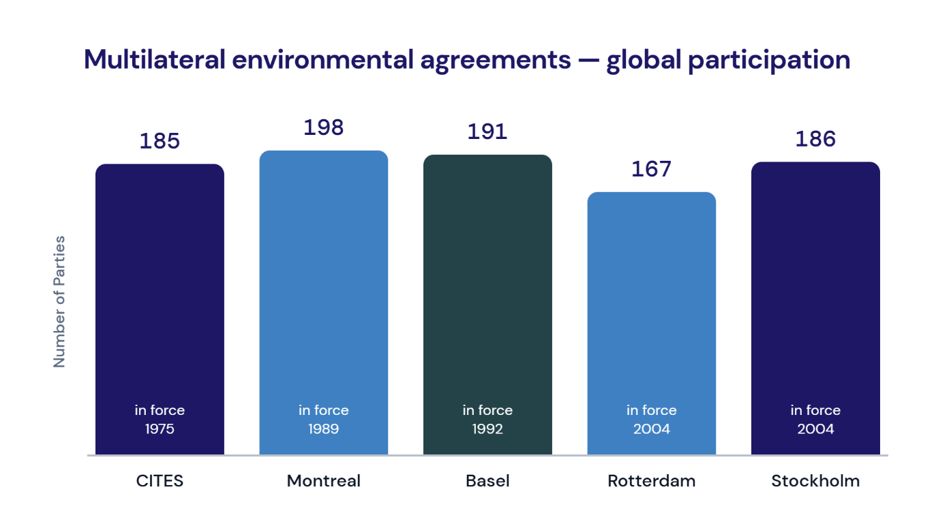
Multilateral Environmental Agreements (MEAs) regulate the international movement of environmentally sensitive goods. Customs administrations play a central role in enforcing these agreements at the border. Examples include preventing illegal trade in ozone‑depleting substances, combating wildlife trafficking, controlling hazardous waste movements, and ensuring safe handling of chemicals and persistent pollutants (Green Customs Guide).
|
Agreement |
What it controls |
Customs role |
|
Convention on International Trade in Endangered species (CITES) (1975) |
Trade in endangered wild animals and plants, and their products |
Check permits; intercept trafficked species and products |
|
Montreal Protocol (1989) |
Ozone-depleting substances and HFCs |
Control ODS/HFC trade; enforce phase-out schedules |
|
Basel Convention (1992) |
Transboundary movement of hazardous and other wastes |
Verify prior consent; prevent illegal waste dumping |
|
Rotterdam Convention (2004) |
Trade in listed hazardous chemicals and pesticides |
Confirm consent and documentation for listed chemicals |
|
Stockholm Convention (2004) |
Persistent organic pollutants (POPs) |
Enforce import/export restrictions on POPs |
3.4. Country and regional initiatives
Countries and trading blocs are turning these obligations into concrete programs. The examples below are grouped by theme.
|
1. Green corridors and sustainable transport |
|
|
Some countries run green corridors to speed the clearance of sustainable exports — such as certified organic products, biofuels, and sustainably sourced timber — and to promote lower-emission transport.
o Clearance of sustainable marine fuels o Verification of fuel certification o Digital documentation to reduce emissions |
|
|
|
2. Wildlife and biodiversity protection |
|
|
|
|
|
3. Waste, chemicals, and hazardous goods |
|
|
· Norway uses artificial intelligence and container scanning to detect illegal waste exports. Norwegian Customs has collaborated with environmental authorities to build a digital system that automatically flags suspicious containers. · China strengthened controls on plastic waste imports, supporting its broader "National Sword" campaign to stop illegal and low-quality waste imports. · Canada – Zero plastic Waste Initiative (Customs Enforcement): Canada Border Services Agency (CBSA) supports enforcement of bans on Single‑use plastics, non‑compliant plastic waste imports, Hazardous waste shipments. · Japan – Green Customs for Fluorinated Gases (F‑gases): Japan has strengthened border controls on fluorinated greenhouse gases under its Act on Rational Use and Proper Management of Fluorocarbons, including Import licensing, Customs verification and Seizure of illegal refrigerants. |
|
|
4. Sustainable commodities and timber |
|
|
|
3.5. European Union (DG TAXUD)
In the EU, the Directorate-General for Taxation and Customs Union (DG TAXUD) ties customs modernization to environmental goals through three main initiatives:
- Single Window Environment for Customs (SW-C) lets traders submit data once and reuse it across agencies, improving compliance on waste, chemicals, and endangered-species controls.
- EU Customs Risk Management Framework (CRMF) builds environmental risk into cargo profiling, helping detect illegal waste, ODS, endangered species, hazardous chemicals, and non-compliant timber.
- Green Deal Customs Strategy (2023-2026) aligns customs with the European Green Deal, including;
o Carbon Border Adjustment Mechanism (CBAM -See CBAM section for full details)
o Strengthening controls on waste, chemicals, and environmentally sensitive goods
o Promoting digitalization to reduce administrative and environmental burdens
o Enhancing cooperation between customs and environmental authorities
o Facilitating trade in low carbon and sustainable products
These initiatives sit within the wider EU Customs Reform package (2023-2026), which includes a new EU Customs Data Hub and a revised approach to platform-based trade.
3.6. Climate-related trade measures
Alongside enforcement, customs is beginning to administer measures that price or restrict trade based on its climate impact. The clearest example is the EU’s Carbon Border Adjustment Mechanism.
Carbon Border Adjustment Mechanism (CBAM)
The Carbon Border Adjustment Mechanism (CBAM) puts a carbon price on the emissions embedded in certain imports, so foreign goods face a cost comparable to EU-produced goods under the EU Emissions Trading System. It supports the EU’s target to cut greenhouse-gas emissions 55% by 2030 and reach climate neutrality by 2050, and it aims to:
- Reduce carbon leakage, where production shifts to countries with weaker climate rules
- Encourage cleaner production outside the EU
- Keep a level playing field between EU and foreign producers
CBAM initially covers six carbon-intensive sectors: cement, iron and steel, aluminum, fertilizers, electricity, and hydrogen. It ran as a reporting-only transitional phase from October 2023 to December 2025, and its definitive phase began on 1 January 2026, when financial obligations took effect. In-scope importers must now:
- Hold Authorized CBAM Declarant status
- Report on the verified embedded emissions in their imports each year
- Purchase and surrender CBAM certificates to cover those emissions
3.7. Internal customs green practices
Governments increasingly recognize the importance of Green Customs in promoting sustainable development and environmental protection. By integrating environmental considerations into their operations and enforcement activities, customs administrations are helping shape a greener and more sustainable global trade system.
These initiatives are supported by the United Nations Environment Programme (UNEP) through the Green Customs Guide, and by the World Customs Organization (WCO) through its Guidelines on the Dematerialization and Paperless Processing in Customs. Key internal green practices include:
|
Practice |
What it involves |
|
Green procurement |
Customs administrations are adopting green procurement policies, prioritizing environmentally friendly products and services such as energy efficient IT equipment, low emission vehicles, recycled materials, and sustainable office supplies. |
|
Digitalization & paperless |
Many customs administrations are reducing paper consumption by shifting to digital documentation, electronic communication, and online submission portals. This supports dematerialization and reduces administrative waste. Electronic permits (e permits) replace traditional paper permits for international trade and travel. They allow electronic submission, verification, and processing, reducing paperwork and improving clearance efficiency. This is part of the broader global shift toward paperless borders. |
|
Energy efficiency |
Customs facilities are improving energy efficiency through LED lighting, smart building systems, renewable energy installations, and low emission heating and cooling systems. Some administrations now include carbon reduction targets in their operational plans. |
|
Training & certification (WCO+UNEP) |
Several customs administrations now require officers to complete Green Customs certification modules, covering MEAs, hazardous waste, wildlife trafficking, and environmental risk profiling. |
|
Solar-powered border posts |
Kenya, India, and parts of Southeast Asia have installed solar powered border posts, reducing reliance on diesel generators and improving resilience in remote areas. |
|
Energy-efficient data centers |
The EU, Singapore, and New Zealand have adopted energy efficient data centers for customs systems, reducing the carbon footprint of digital trade platforms. |
|
Waste reduction & recycling |
Customs offices in Australia, the Netherlands, and South Korea have implemented structured recycling programs for seized goods, packaging materials, and office waste. |
By implementing these practices and initiatives, customs administrations contribute to a more sustainable and environmentally responsible global trade system.
3.8. Impacts on human rights and forced labor
Green Customs increasingly overlaps with human-rights enforcement, especially forced labor in supply chains. The shift to renewable energy relies on critical minerals such as cobalt, lithium, nickel, and rare earths, and mining and processing in some regions have been linked to forced and child labor. Green sectors such as agriculture, forestry, recycling, and construction also carry high labor-exploitation risk, so sustainability goals can create forced-labor exposure if supply chains are not monitored.
Businesses with international supply chains are expected to conduct due diligence in line with the UN Guiding Principles on Business and Human Rights and the OECD Guidelines for Multinational Enterprises, including:
- Assessing forced labor and exploitation risks
- Preventing or mitigating negative impacts
- Monitoring suppliers and subcontractors
- Providing remedy when abuse occurs
Many countries now have legislation requiring mandatory human rights and environmental due diligence (mHREDD), often linked to import prohibitions on goods produced with forced labor. Examples include:
|
Jurisdiction |
Measure |
What it does |
|
EU |
Corporate Sustainability Due Diligence Directive (CSDDD) |
Adopted 2024; phasing in mandatory due diligence for large companies in the EU. |
|
US |
Uyghur Forced Labor Prevention Act (UFLPA) |
Targets goods linked to forced labor in Xinjiang; CBP uses data analytics to flag shipments. |
|
Canada |
Fighting Against Forced Labour and Child Labour in Supply Chains Act |
Requires reporting on forced-labor risks, with customs enforcement. |
|
Australia |
Modern Slavery Act review (2024–2025) |
Strengthens reporting and adds penalties; focus on renewable-energy chains. |
|
New Zealand |
Modern Slavery & Worker Exploitation legislation (in progress) |
Expected to introduce due-diligence obligations aligned with global standards. |
3.9. Impacts of deforestation
Deforestation occurs when forests are permanently cleared, often for agriculture, mining, or construction. Forest degradation weakens forests so they can no longer support biodiversity, carbon storage, or ecosystem services. Both processes contribute significantly to climate change, biodiversity loss, and soil and water degradation.
Customs authorities are increasingly implementing deforestation‑related controls by requiring proof that certain commodities entering the market are deforestation‑free and legally produced. This includes verifying that products are not derived from recently deforested land and ensuring compliance with environmental and land‑use laws in the country of origin.
The European Union has implemented the Deforestation Regulation (EUDR), which aims to prevent products linked to deforestation and forest degradation from entering the EU market. Its purpose is to reduce the EU’s contribution to global deforestation by ensuring that relevant commodities and products are Deforestation‑free and legally produced in the country of origin.
The regulation covers seven key commodities: cattle, cocoa, coffee, oil palm, rubber, soy, and wood, as well as a wide range of derived products such as leather, chocolate, furniture, paper, tyres, and palm‑oil derivatives. Under the EUDR, operators and traders must:
- Ensure full traceability, including geolocation coordinates of the land where the commodity was produced
- Conduct risk assessments and risk mitigation
- Submit due diligence statements before placing goods on the EU market
- Demonstrate that products are deforestation‑free and legally produced
Customs administrations may verify documentation, inspect goods, check geolocation data, and block or prevent the import of non‑compliant products. Implications for businesses sourcing from high‑risk regions include:
|
01 Supply chain changes Companies may need to shift to certified or verified deforestation free suppliers and invest in traceability systems. |
02 Increased Due Diligence requirements Businesses must implement robust due diligence procedures to ensure compliance with the EUDR and similar regulations emerging globally. |
03 Market assess risks Companies sourcing from areas with high deforestation risk may face higher compliance costs, delays, or loss of access to the EU market. |
3.10. Summary
Green Customs is no longer optional; it is essential to achieving global environmental goals and protecting natural ecosystems. With their strategic position at borders, customs administrations are powerful agents of change. Through cooperation, modernization, and strong enforcement, they can help shift global trade toward sustainability.
Customs professionals, policy makers, and environmental authorities must work together to build a 21st‑century border control system that not only facilitates trade but also safeguards the planet.
Logistics providers such as DHL, along with the wider international trading community, are essential partners in advancing Green Customs. Beyond transporting goods, they support environmental compliance by verifying documentation for regulated items, sharing emissions and traceability data, adopting low‑impact transport and packaging solutions, and collaborating with Customs on risk detection and enforcement.
4. Disruptive customs technologies and automation
Introduction
The growth of international trade, e-commerce, and global supply chains has put a wide network of players under pressure. Customs administrations, border agencies, environmental regulators, logistics providers, e-commerce platforms, technology vendors, policymakers, and international organizations are all managing rising volumes while maintaining compliance and sustainability standards.
Traditional border control can no longer keep pace with the volume, complexity, and speed of today’s trade. Customs agencies are becoming technology-driven, data-informed institutions that use digital tools to secure borders, facilitate legitimate trade, and improve efficiency. The task is a dual mandate: clear legal trade quickly while stopping smuggling, terrorism financing, and environmental crime.
Disruptive customs technology is less about tools than about re-engineering processes. It has moved well beyond the early computerization of clearance into integrated systems built on artificial intelligence (AI), blockchain, big-data analytics, and advanced risk-management platforms. The WCO, the EU (through DG TAXUD), and bodies such as UNCTAD all point to digital transformation as the route to paperless, intelligent borders.
4.1. Disruptive customs technologies and automation
The emergence of disruptive technologies presents a tremendous opportunity in the cross‑border movement of people and goods. As huge volumes of data are generated by people and goods moving across borders, these technologies provide the ability to make sense of this ever‑increasing information flow, particularly for risk management, compliance, and trade facilitation.
|
01 Artificial intelligence and machine learning (AI/ML) AI and ML analyze large datasets and detect patterns more accurately than manual review, giving faster and more consistent decisions. Customs uses them for: · Risk assessment and targeting · Fraud detection · Automated document processing · Image analysis for non-intrusive inspection · Predictive analytics for cargo flows |
02 Blockchain Blockchain provides secure, transparent, tamper-resistant data sharing across supply chains, creating a single source of truth across agencies and private partners. Applications include: · Digital certificates of origin · Tokenized customs guarantees · Secure cargo tracking · Trusted trader programs · Digitized workflows and smart contracts |
|
03 Internet of Things (IoT) IoT devices improve supply-chain visibility and real-time monitoring, supporting both compliance and sustainability: · Tracking high-risk shipments · Monitoring temperature and humidity for perishables · Detecting tampering, diversion, or seal breaches · Monitoring emissions and fuel use for green-corridor initiatives |
04 Big-data analytics Analyzing large volumes of structured and unstructured data lets administrations: · Identify trade anomalies · Improve risk-profiling models · Allocate resources more effectively · Detect emerging smuggling patterns · Support environmental and safety enforcement |
|
05 Non-intrusive inspection (NII) NII lets officers inspect cargo without opening containers, and modern systems pair with AI for real-time image analysis: · X-ray scanners · Gamma-ray imaging · Backscatter systems · Smart seals with GPS and tamper sensors · Advanced CT (computed tomography) scanning |
06 Drones (unmanned aerial systems) Drones give cost-effective surveillance where land access is hard: · Patrolling remote borders · Detecting illegal crossings · Monitoring coastal areas · Identifying illegal dumping or environmental violations |
|
07 Other emerging technologies · Robotic process automation (RPA): automates repetitive tasks such as data entry, declaration validation, and license checks · Biometrics: strengthens identity verification for travelers and trusted-traveler programs · Cloud services: enable scalable, interoperable, secure customs platforms · Digital twins: simulate port and border operations for planning and optimization · Quantum computing (emerging): expected to reshape encryption, optimization, and complex risk modeling · Biotechnology (emerging): potential to detect biological threats or verify species in wildlife trade |
|
|
Note DHL has implemented a range of disruptive technologies and automation strategies to support customs modernization and enhance border efficiency. These include:
Each solution is designed to streamline regulatory compliance, minimize manual intervention, and improve the accuracy and integrity of trade data. |
4.2. Challenges and barriers
The implementation of new technologies and increased automation in border processes presents both opportunities and challenges. While these advancements can streamline operations, reduce costs, and improve efficiency, they also face risks of over‑regulation, fragmented governance, and a shortage of skilled specialists needed to operate, maintain, and interpret these systems. There must also be careful consideration of integration and interoperability, particularly when multiple agencies and private‑sector partners rely on different platforms or data standards. If these factors are not well managed, they can lead to delays, increased costs, and reduced trade facilitation.
4.3. Customs process related automation
|
“Insights on the technologies used to digitalize global supply chains is an indispensable part of the discussions around digitalization of Customs and border management and must be viewed within a broader framework of paperless cross‑border trade.” — Former WCO Secretary General Kunio Mikuriya. WCO/WTO Study Report on Disruptive Technologies JUNE 2022: www.wto.org/english/res_e/booksp_e/wco-wto_e.pdf |
Disruptive technologies and automation are transforming customs operations, offering significant opportunities to enhance efficiency, security, and trade facilitation. They are enabling a shift toward more efficient, transparent, and secure customs procedures, reducing delays and operational costs. These technologies also contribute to supply‑chain sustainability by optimizing processes, reducing waste, and minimizing environmental impact. The trend is toward integrating these tools into holistic, end‑to‑end digital ecosystems, enabling better decision‑making and more effective border management.
However, successful implementation requires careful consideration of the challenges, including workforce development, cybersecurity, interoperability, and governance. A proactive approach is essential to ensure that digital transformation delivers its full potential.
The WCO partnered with the World Trade Organization (WTO) on disruptive technologies, resulting in a global survey on the adoption of advanced technologies by Customs and the development of the joint paper “The Role of Advanced Technologies in Cross‑Border Trade: A Customs Perspective.” This work is reflected in the updated Study Report on Disruptive Technologies (2022).
|
Further reading WCO/WTO joint report on disruptive technologies: WCO/WTO Study Report on Disruptive Technologies WCO Survey on the adoption of Customs smart processes and procedures: Smart Customs Survey 2024 |
Customs process automation leverages technology to streamline and digitize various aspects of international trade, including documentation, clearance, and compliance checks. This automation improves efficiency, reduces errors, and strengthens regulatory compliance in both import and export processes. It involves software and systems capable of tasks such as data extraction from documents, automated calculation of duties and taxes, and integration with customs management platforms. Examples include:
- Increased Efficiency: Automation and advanced technologies streamline cargo clearance, inspection, and document processing, reducing delays and costs.
- Enhanced Security: AI‑powered risk‑assessment tools and IoT‑enabled tracking systems improve border security and help prevent illegal activities.
- Improved Trade Facilitation: Faster processing times and greater transparency support smoother, more predictable cross‑border trade.
- Reduced Costs: Automation reduces manual processing, data‑entry errors, and administrative overheads.
- New Skill Requirements: Customs officials must adapt to new technologies and develop digital competencies to manage and utilize these tools effectively.
4.4. Examples of disruptive technology implementation
· Smart Customs Project (WCO / CCF-China): expands on the 2022 Study Report across blockchain, AI/ML, IoT, drones and robots, biometrics, and virtual/augmented/mixed reality. Its April 2024 global survey drew 116 responses (62% of WCO members) and set three focus technologies — AI/ML with big data and analytics, blockchain, and cloud computing; 92% of respondents already had an IT strategy in place.
- European Union (DG TAXUD): the Customs Reform Package (2023) lays the foundation for a fully digital customs union:
o EU Customs Data Hub: a central platform for sharing and analyzing customs data across Member States
o EU Customs Single Window: connects customs with other regulators for joint, data-driven decisions
o Carbon Border Adjustment Mechanism (CBAM): relies on digital systems to track embedded carbon in imports
- Blockchain pilots: several countries are testing blockchain for cross-border documentation, trusted-trader programs, and supply-chain visibility
- AI risk-management systems: many administrations use AI to flag high-risk shipments; Dubai Customs runs RIISE (AI, predictive analytics, and blockchain), and the Port of Qingdao uses AI for automatic container detection
- Japan — SMART Customs: digitizes the importer/exporter experience while focusing enforcement on high-risk transactions
- New Zealand — eGate: biometrics and automated border control for passenger processing
- Singapore — Networked Trade Platform (NTP): a national digital trade ecosystem with single data submission, API-based interoperability, and AI anomaly detection
- South Korea — UNI-PASS: a fully paperless system with integrated risk management and IoT cargo tracking, exported to more than 20 countries
- Brazil — SISCOMEX modernization: blockchain pilots, integrated port-community systems, and IoT container monitoring
- Australia — digital identity and trusted trader: piloting digital identity for trade actors, automated trusted-trader benefits, and AI-supported compliance checks
4.5. AI risk mitigation, governance, and associated risks
AI offers major gains, but only with strong ethics, clear legal frameworks, and practical guidance. Effective governance is a shared public–private responsibility: AI must be transparent, explainable, and used in ways that keep trust in border processes especially for AI-enabled communication tools, automated decisions, and applications such as HS classification and risk scoring.
Human oversight stays essential. Officers must verify declarations, interpret complex cases, and maintain quality control where automated systems miss nuance or context, which makes skills training and workforce reform a priority. Data integrity and security are equally central: AI can be exploited to manipulate data or generate fake content, so encryption, access controls, and regular audits, plus transparent redress mechanisms, are required to keep decisions fair and accountable.
Key risks and challenges associated with AI
Maintaining integrity in a digital environment requires secure systems, strong data governance, and transparent processes. Key challenges include:
|
Risk |
Why it matters |
|
Data security & privacy |
Ensure accuracy, reliability, and protection of sensitive data, and preventing manipulation or unauthorized access. |
|
Cybersecurity threats |
Customs systems need robust controls and continuous monitoring. |
|
Legacy integration |
Embedding AI in older infrastructure is complex, costly and resource intensive. |
|
Collaboration and information sharing |
Effective cooperation between customs agencies, other government bodies, and the private sector is vital for identifying risks and preventing illicit activities. |
|
Transparency & accountability |
Clear rules and oversight prevent corruption and build trust in AI-supported decisions. |
|
E-commerce & digital trade |
The scale and speed of digital trade require customs to manage increased risks of fraud, misdeclaration, and illicit activity. |
|
Ethical consideration |
Bias, fairness, explainability, and discriminatory outcomes. |
|
Workforce adaptation |
Training so officers can use, supervise, and challenge AI-enabled systems. |
4.6. Summary
Customs technology and automation are now central to modern border governance. Digital transformation strengthens security, accelerates trade, reduces costs, and builds trust in border processes. But achieving these benefits requires sustained investment, political commitment, and strong international cooperation. Success depends on a wider ecosystem of actors working together, including:
- Logistics providers, who must integrate with digital customs systems and ensure accurate, compliant data flows
- Border agencies, which need interoperable platforms to support joint inspections and coordinated decision‑making
- Technology vendors, who develop the infrastructure for AI‑driven risk profiling, non‑intrusive inspection, and secure data exchange
- Policy makers, who must craft enabling, risk‑based legislation that supports innovation rather than constraining it
- International organizations, such as the WCO, WTO, and UNEP, which provide standards, guidance, and global coordination
Digital customs is no longer optional, it is the foundation of efficient, secure, and sustainable border management.
5. Integrity
Introduction
Customs administrations play a central role in trade facilitation, revenue collection, community protection, and national security. When integrity is lacking, Customs can distort trade and investment, erode public trust in government, and ultimately jeopardize the well-being of citizens.
Corruption can take hold in any public sector agency, including Customs, reducing effectiveness and damaging institutional credibility. Collaboration between customs administrations, private sector stakeholders, and international organizations is increasingly recognized as essential to building a culture of integrity.
A culture of integrity fosters public trust in government institutions and promotes a more transparent and accountable administration It underpins fair trade practices, effective revenue collection, and national security. Integrity is not solely a government responsibility: traders, freight forwarders, customs brokers, and logistics firms also carry ethical obligations.
As e-commerce expands, Green Customs responsibilities grow, and digitalization and AI become embedded in border processes, integrity must extend to data governance, algorithmic transparency, and the ethical use of technology, so that modernization does not open new opportunities for corruption or misuse.
|
Note Integrity is a prerequisite for a Customs administration to function properly. It is the foundation of legitimacy, not an optional extra. |
5.1. Definition
Definition
There is no universally agreed definition of corruption, and none that deals exclusively with corruption in Customs. Integrity in Customs is widely understood to mean the honesty, professionalism, and ethical behavior of Customs personnel and institutions. It means laws are applied consistently, decisions are made transparently, and stakeholders are treated fairly. Where integrity is lacking, Customs becomes vulnerable to corruption, which can appear as:
- Bribery and extortion at border crossings
- Manipulation of import/export valuations
- Collusion with smugglers or organized crime
- Uneven or selective enforcement of trade regulations
Many administrations now define integrity more broadly than the absence of corruption. It increasingly covers compliance with service standards, client charters, and performance expectations. In this sense, integrity is a positive set of attitudes and behaviors that promote ethical conduct, professionalism, and high-quality service delivery.
Integrity therefore means building and maintaining the values and work practices that strengthen organizational culture and support the credibility, professionalism, and effectiveness of Customs. Integrity challenges remain a major obstacle to reform and can undermine an organization's functioning and reputation.
5.2. WCO and integrity
Integrity in Customs has evolved over time, with the World Customs Organization (WCO) playing a central role in promoting it globally. The WCO's focus on integrity began in the late 1980s, when it recognized the need to combat corruption and strengthen ethical conduct within customs administrations. This led to the Arusha Declaration (1993), which set a global benchmark for addressing corruption in Customs. The Revised Arusha Declaration (2003) strengthened that commitment further, providing practical guidance for developing and implementing anti-corruption policies and integrity programs.
International instruments to fight corruption
Over the years, a range of conferences, declarations, and conventions have addressed administrative corruption. They have sought to define the problem and identify standards and practices necessary to combat it. Four declarations in particular — the Original WCO Revised Arusha Declaration (1993), the Columbus Declaration (1994), the Lima Declaration (1997), and the Brussels Declaration (2020) — set out a series of Customs‑related recommendations.
The WCO has developed important guidance to support Customs administrations in managing integrity risks. The WCO Revised Arusha Declaration remains the key reference document, supported by tools such as the WCO Integrity Development Guide and the WCO Anti‑Corruption and Integrity Promotion (A‑CIP) Program.
The G20 High‑Level Principles on Countering Corruption in Customs (2017) also reinforce the elements of the Revised Arusha Declaration and reflect global consensus on the importance of integrity in border management.
Other international bodies, including the OECD, OAS, EU, UN, World Bank, and Transparency International, have also contributed significantly to global anti‑corruption standards and best practices.
The revised Arusha Declaration
Revised in 2003, the Declaration identifies ten key elements essential for strengthening integrity in Customs:
1. Leadership and Commitment
2. Regulatory Framework
3. Transparency
4. Automation
5. Reform and Modernization
6. Audit and Investigation
7. Code of Conduct
8. Human Resource Management
9. Morale and Organizational Culture
10. Relationship with the Private Sector.
These elements are designed to reduce monopoly power, limit inappropriate use of official discretion, and increase practical accountability. They underpin the three principal components of an integrity management program:
|
01 Eliminate opportunity Remove the changes to act corruptly |
02 Eliminate motivation Remove the reason to act corruptly |
03 Implement effective controls Detect and deter misconduct |
The WCO designed the Declaration to be non‑prescriptive, providing a conceptual framework that allows each administration to implement the elements in a manner suited to its unique social, political, and economic context.
5.3. WCO Integrity guide
The WCO Integrity Guide describes four areas of Customs work: revenue collection, community protection, trade facilitation, and national security, that all depend on integrity. A perceived lack of it can destroy an administration's legitimacy and cripple its ability to do its job.
The adverse effects of (a) corruption, (b) a perceived lack of integrity, and (c) weak governance measures within Customs administration may include:
|
|
Integrity in Customs also supports global trade governance. Multilateral Environmental Agreements (MEAs), WTO rules, and Free Trade Agreements all assume consistent, corruption‑free enforcement at borders. Without integrity, even the best‑designed trade rules cannot function effectively.
5.4. Relationship with the private sector
Element 10 of the Revised Arusha Declaration is about the relationship between Customs and the private sector. The Declaration states:
|
“Customs administrations should foster an open, transparent and productive relationship with the private sector. Client groups should be encouraged to accept an appropriate level of responsibility and accountability for the problem and the identification and implementation of practical solutions. The establishment of Memoranda of Understanding between Customs and industry bodies can be useful in this regard. Likewise, the development of codes of conduct for the private sector, which clearly set out standards of professional behaviour, can be useful. Penalties associated with engaging in corrupt behaviour must be sufficient to deter client groups from paying bribes or facilitation fees to obtain preferential treatment.” (WCO, 2003, p. 2) |
The WCO emphasizes the important role client groups play in controlling corruption and suggests that performance standards, client service charters, customs–industry liaison committees, and comprehensive communication strategies are useful tools to combat corruption. A high level of integrity is also crucial for Authorized Economic Operator (AEO) certification, where trust and compliance form the foundation of partnership.
Fostering integrity between Customs and the private sector is essential for effective trade facilitation, revenue collection, and community protection. This requires a collaborative and transparent relationship based on shared responsibility and open communication. Key aspects include:
|
Aspect |
What it means |
|
Open communication & dialogue |
Regular channels and honest dialogue between Customs and economic operators build mutual trust; share rules and invite feedback. |
|
Shared responsibility |
Both sides own integrity; codes of conduct, integrity pledges, and anti-corruption programs reinforce it. |
|
Transparency & accountability |
Open operations and accessible information build trust on both sides. |
|
Capacity building & training |
Training deepens understanding, strengthens compliance, and promotes ethical conduct. |
|
Monitoring & evaluation |
Regular monitoring and evaluation of integrity shows where to improve and keep the relationship corruption-resistant. |
5.5. Examples of good practice
The following are some examples of good practice:
- Memoranda of Understanding (MoUs): Establishing MoUs between Customs and private‑sector stakeholders can formalize the relationship, clarify expectations, and outline shared responsibilities for integrity and compliance.
- Codes of Conduct: Developing codes of conduct for the private sector helps set clear standards of professional behavior. These tools encourage private‑sector actors to accept responsibility and accountability and support the identification and implementation of practical integrity solutions.
- Customs Integrity Perception Surveys: Conducting surveys to assess the perceptions of both Customs officials and private‑sector operators can help identify integrity risks, gaps in service delivery, and areas requiring improvement.
- Internal Affairs / Professional Standards Units: Establishing internal affairs departments within Customs administrations helps investigate and address allegations of misconduct. This includes developing and promoting secure channels for reporting corruption or unethical behavior.
- Joint Anti‑Corruption Task Forces: Creating joint Customs–private sector structures, such as integrity observatories or liaison committees, enables trusted representatives from both sides to consolidate complaints, share intelligence, and address corrupt practices collaboratively.
- Integrity Training for the Private Sector: Training and awareness programs help bridge gaps in understanding, reduce mistrust, and promote shared ethical standards across the supply chain.
- Motivating the Private Sector to Comply: Through training, awareness, and joint initiatives, Customs can encourage voluntary compliance. Incentives — such as simplified procedures, reduced inspections, and faster clearance — reward compliant behavior, while non‑compliance is addressed firmly.
- Automation of Procedures: Automating key customs processes reduces opportunities for corruption, increases transparency, and improves efficiency.
- Engagement with Stakeholders: Active engagement through working groups, consultations, business partnerships, and outreach programs build trust and fosters a shared commitment to integrity.
- AEO Integrity Requirements: Embedding integrity criteria into Authorized Economic Operator (AEO) programs strengthens trust‑based partnerships and incentivizes ethical behavior.
DHL demonstrates a strong commitment to integrity through a global Code of Conduct, a structured Compliance Management System, and ongoing employee training. These practices promote transparency in customs declarations, ethical business conduct, and alignment with international standards.
5.6. Customs reform and modernization
The WCO has developed a range of non‑prescriptive integrity‑related materials and tools to assist Customs administrations in implementing the provisions of the Revised Arusha Declaration. These include the WCO Integrity Action Plan, the Compendium of Integrity Best Practices, the Integrity Development Guide, and the Integrity Resource Centre. More recently, integrity support has also been strengthened through the WCO Anti‑Corruption and Integrity Promotion (A‑CIP) Program, which provides technical assistance and capacity building to participating administrations.
Across these programs, the onus remains on individual Customs administrations to design and implement integrity initiatives based on their own needs, risks, and national circumstances. Integrating the principles of the Revised Arusha Declaration is considered an essential part of any reform and modernization process. To this end, the WCO has ensured that integrity is:
- a major chapter in the Capacity Building Diagnostic Framework
- a key component of the self‑assessment checklists for the Framework of Standards to Secure and Facilitate Global Trade, which now specifies the need for a robust internal code of conduct
- an integrated part of Diagnostic Workshops and Diagnostic Missions under the Mercator Program (launched in 2014), which recognizes that successful reform requires more than technical compliance — it demands ethical, transparent, and accountable customs administrations
The WCO’s approach reinforces that integrity is not an “add‑on” but a core pillar of effective reform, underpinning modernization efforts, digital transformation, and the credibility of Customs in the global trading system.
5.7. Summary
Integrity is the cornerstone of customs border governance, and it is shared across everyone who touches the border. Each actor carries a clear part of it.
|
01 Logistics providers Transparent declarations; no facilitation payments or misclassification of goods. |
02 Importers, exporters, and brokers Honest documentation and ethical conduct |
|
03 Border agencies and environmental regulators Fair, consistent enforcement |
04 Technology vendors Tamper-resistant, auditable systems |
|
05 International bodies (WCO) Standards, guidance, and cooperation |
|
As global supply chains become more complex and digitized, embedding integrity across all actors is essential to building resilient, transparent, and accountable trade systems.
|
Note As supply chains grow more complex and digitized, embedding integrity across every actor is essential to building resilient, transparent, and accountable trade systems. |