Study Guide
Electronic Advance Data (EAD)
The Electronic Advance Data (EAD) initiative is a joint program developed by the World Customs Organization (WCO) and the Universal Postal Union (UPU) to improve the security and efficiency of international postal services. EAD involves sending digital information about postal shipments before they arrive at their destination. This information typically includes details of the sender and recipient, a description of the contents, and the value of the items. Customs authorities use this data to assess risk and support faster clearance.
The objectives of the WCO-UPU EAD initiative are:
- Enhancing security: improve security by providing advance information to help identify prohibited or dangerous goods
- Facilitating trade: support trade by enabling faster processing of legitimate shipments and reducing delays
- Standardizing procedures: standardize procedures by promoting consistent electronic messaging formats across countries
- Regulatory compliance: support compliance with international and national legal requirements
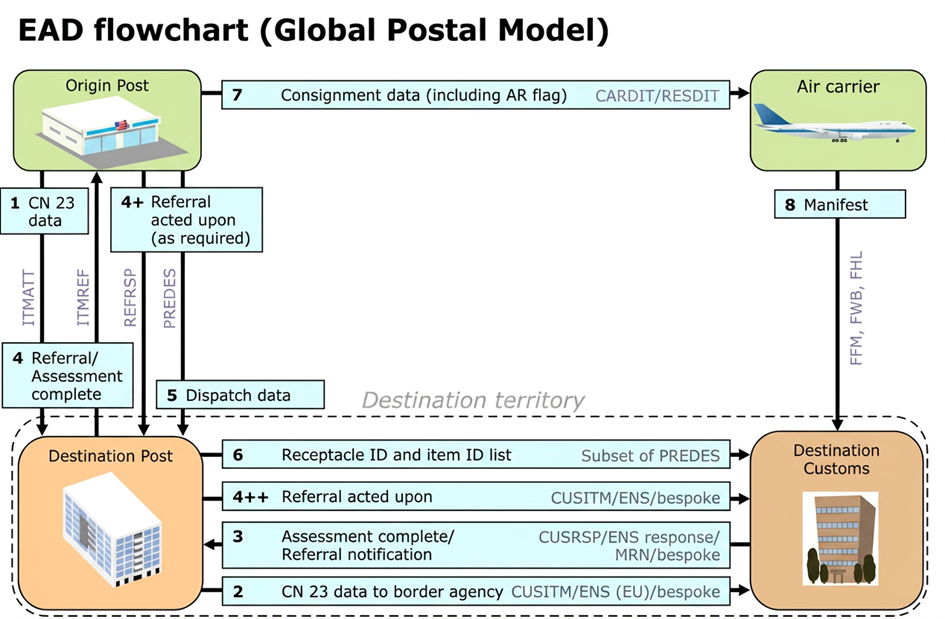
The following schematic (EAD Global Postal Model) shows the various components developed to enable the postal sector to comply with emerging requirements for providing EAD for Customs (both regulatory compliance and trade facilitation purposes). The model identifies eight data flows between postal operators, airlines, and customs administrations.