
Study Guide
3. Part 2: Customs Compliance Management
3.6. Contemporary Compliance Models
When examining contemporary approaches to compliance management, we need to understand the theory of compliance management, under which a strategic compliance plan can be developed by a regulatory agency to ensure that traders and service providers are compliant with the legislation, or can readily be identified as non-compliant and dealt with in the appropriate way. The model we are about to examine recognises that some, but not all, non-compliance will be intentional. Traders and service providers may be non-compliant for many reasons, including, for example:
n Failure to understand the law
n Unintentional error in compiling and lodging declarations
n Errors caused through reckless disregard for requirements
n In the worst cases, deliberate fraud or criminal intent
The risks posed by these different forms of behaviour need to be identified and dealt with. But the treatments to deal with these risks must also be different, depending on the behaviour involved. Treatments might range from information and education programs, through various types of audit to investigation and prosecution, culminating in either administrative or criminal penalties. The important factor in any compliance strategy is to have a range of options available to treat the risks, and to minimise both the likelihood of non-compliance and the consequences of non-compliance.
In this part of the Study Guide we will look closely at the work developed by Professor David Widdowson, the CEO of CCES, as set out in his seminal article Managing Customs Risk and Compliance: An Integrated Approach. The full article is available on line at Managing Customs Risk and Compliance: An Integrated Approach and I would encourage you to read it carefully.
The integrated model provides practitioners with a logical and systematic methodology for managing compliance in the Customs context. 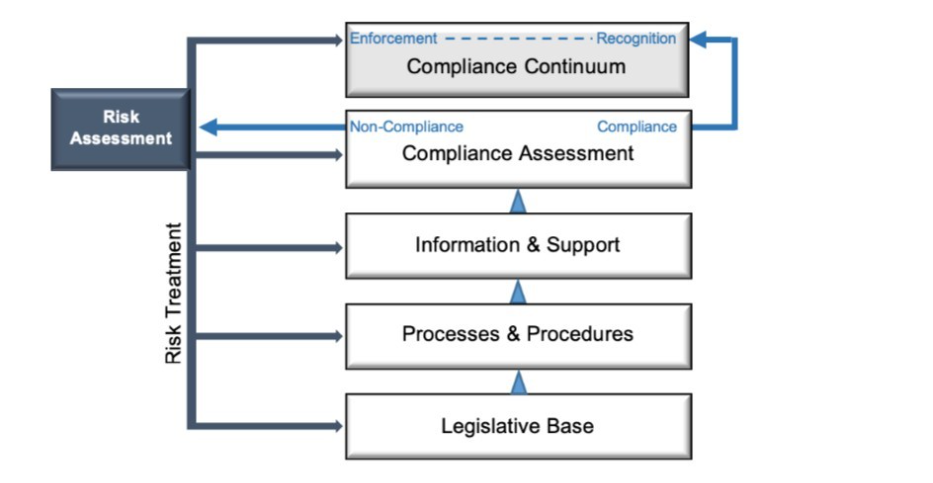
Figure 1: Integrated Compliance Management Framework Source: Widdowson (2020)
The framework incorporates the key aspects of an effective risk-based compliance management strategy, including:
|
01 The law that is to be enforced |
02 Processes and procedures that regulate the way in which the law is applied |
|
03 Services to support the community’s ability to comply with the law |
04 Compliance assessment methods |
|
05 Risk assessment processes of non-compliance with the law |
06 Risk mitigation techniques |
|
07 Strategies to address the continuum of compliance behaviour |
|
Professor Widdowson (2020) summarises this framework as follows:
In essence, the framework is based on the legislation and associated processes and procedures which represent the regulatory requirements for which Customs has administrative responsibility. This includes all aspects of their direct regulatory responsibilities, including the import, export and transit of goods, as well as any matters that are administered on behalf of other agencies, such as health, agriculture, taxation, environment, statistics and in some cases, immigration. In order to ensure compliance with such requirements, there is firstly a need to make certain that members of the trading community are aware of their rights and responsibilities, by providing them with the necessary information and support to comply.
It is then necessary to assess levels of compliance through the use of various techniques such as data screening, documentary checks, non-intrusive inspection, audit and investigation, the result of which will be the identification of either compliance or non-compliance. Where non-compliance is identified, the reason for non-compliance must be established by assessing the relevant risk, leading to the identification of appropriate risk mitigation strategies, which may involve revisiting the legislative base, processes and procedures, information and support, or compliance assessment techniques, or may require some form of enforcement action.
In situations where compliance is identified, the appropriate response is to actively recognise the compliant behaviour. In practice, the level of compliance identified will form part of a continuum from criminal behaviour and fraud through to voluntary compliance. The relevant response will therefore depend on the trader’s position on the compliance continuum. Enforcement strategies for identified non-compliers include warnings, penalties and other sanctions, while recognition strategies for compliers include increased levels of self-assessment, reduced regulatory scrutiny, and increased levels of facilitation.
Let us look at each of these aspects of the model in a little more depth.
Legislative base
The risk to be managed by any government agency is the risk to the achievement of its fundamental objective — that is, the risk of non-compliance with the laws for which it has administrative responsibility. Since the primary role of Customs administrations is to ensure compliance with the law, the starting point in any regulatory regime must be the establishment of an appropriate legislative framework.
Legislation exists to give effect to government policy. It must reflect accurately the wishes of the government, the policy intent, and the international obligations taken on by the government. The legislation must also fully support the customs compliance strategy.
For example, where the strategy is based on a self-assessment regime, with compliance measured through post-transaction audit, the legislation must support that approach. It will require some or all of the following elements:
|
Legislative element |
What it needs to be provided |
|
Self-assessment lodgement |
Provision for the lodgement of documents based on self-assessment by the trader. |
|
Self-assessed transaction processing |
Provision for processing transactions on the basis of self-assessed submissions, without prior Customs review. |
|
Audit and compliance powers |
Provision for audit and other compliance activity, covering the rights and obligations of the party being audited, and the powers and duties of those undertaking the audit. |
|
Third-party audit recognition |
Provision for the regulatory authority to rely on third-party audits where that approach is preferred over direct Customs audit. |
|
Sanctions for non-compliance |
Provision for sanctions to be applied for non-compliance, whether with transaction requirements or with the audit process itself. |
There is considerable guidance provided by the RKC, the HS Convention, the SAFE Framework of Standards, the Valuation Agreement and the Trade Facilitation Agreement — all of which inform the content of Customs legislation and of the Regulations that support and expand the legislation. As well as providing detailed guidance on matters such as tariff, valuation and clearance procedures, they also provide guidance on the nature of Customs legislation, which is to be clear, simple and accessible.
Processes and Procedures
The next section of the Framework expands and supports the legislative base by providing the practical detail on how the law is to be applied, and how those regulated by the law can be compliant with it. As Professor Widdowson's (2020) article explains:
|
Regulatory processes and procedures provide further clarity and detail about how a particular law is administered and enforced…. Guidelines, directives, operating instructions, procedural statements and the like support the application of legislative provisions by specifying details such as information that must be provided to the authorities, the manner and timeframe in which it should be provided, the way in which compliance may be demonstrated, and the systems and procedures that are deemed to satisfy legal provisions. They put the meat on the legislative bones by providing the degree of detail that may not be appropriate to include in the statutes or regulations, particularly in relation to matters that may be subject to regular review. The manner in which such processes and procedures may be determined often allows the administration a degree of flexibility in terms of the way in which laws are enforced. For example, the legislation may require traders to obtain a permit in order to import certain commodities. However, Customs may have the discretion to administer this provision in a number of different ways, depending on the perceived level of risk. Trusted traders may, for example, be granted a permit that allows unlimited importation for a period of time, whereas higher risk traders may be required to obtain permits on a shipment-by shipment basis. Importantly, as noted in the preamble to the RKC, customs procedures and practices should be applied in a predictable, consistent and transparent manner. |
Information and support
Customs has a responsibility to ensure that the international trading community has a clear understanding of its rights and responsibilities. There is a need for people to know what the rules are — if they do not, how can they be expected to comply? Customs authorities are increasingly recognising the need to provide meaningful advice to those being regulated. This is often referred to as a policy of 'informed compliance', which involves the use of a range of 'client service' initiatives designed to ensure that those being regulated know what the rules are.
The manner in which regulatory requirements are publicised will vary depending on the circumstances, but a logical starting point is to provide comprehensive information on the administration’s website. This should include, as a minimum, the legislation itself; details of any rulings, decisions and determinations that help inform the way in which the law is interpreted; a clear overview of relevant processes and procedures; administrative guidelines and explanatory material such as factsheets that serve to clarify such processes; and details of where further information may be obtained, including available learning packages. (Widdowson 2020).
In addition to the website, Customs needs to establish an appropriate range of client service strategies to provide the public with the means to achieve certainty and clarity in identifying their rights and responsibilities and assessing their liabilities and entitlements. These may include (but are not limited to):
n Consultation and cooperation
n Clear administrative guidelines
n Advance rulings
n Education and awareness
n Technical assistance and advice
n Appeal mechanisms
A guiding principle of the RKC is that its rules and practices should be transparent and accessible to anyone dealing with Customs, and that interested parties should be provided with all necessary information regarding Customs laws, regulations, administrative guidelines, procedures and practices. The RKC requires that all relevant information concerning Customs law is readily available to any interested person (Standard 9.1). The associated guidelines make clear that the scope of such information is extremely broad:
|
Such information would include the tariff classification of goods, rates of duty and taxes, valuation of goods for Customs purposes, information relating to exemptions, prohibitions and restrictions, Customs administrative arrangements and requirements, and any other pertinent information which will be of interest to the relevant interested parties. (RKC General Annex Guidelines, Ch. 9, Standard 9.1) |
The need for assistance to traders also underpins the Trade Facilitation Agreement, and the wealth of explanatory materials provided by the Harmonized System Committee are designed to assist traders and brokers to apply the classification rules of the HS Convention correctly.
Compliance assessment
The modern Customs service has a wide range of compliance assessment tools available to exercise Customs control in accordance with Chapter 6 of the General Annex. Because Customs has a responsibility to enforce the law, it must determine whether those being regulated are complying with the law.
|
The powers that are available to officers to undertake this task are generally quite extensive. Like the laws they are assigned to enforce, the powers of officers must themselves be based in legislation, supported by formal processes and procedures, and promulgated to ensure that the public is fully aware of the administration’s legal authority. (WCO, 2011, pp. 1–2). The various methods of assessing compliance all form part of the system of customs control, which is addressed in Chapter 6 of the RKC. The Convention specifies that all internationally traded goods shall be subject to customs control (Standard 6.1)15 and provides that such control shall be limited to that necessary to ensure compliance with the law (Standard 6.2), and that it should be applied using the principles of risk management (Standards 6.3 and 6.4). Consequently, there is a clear expectation that the various methods of compliance assessment should be applied in a way that provides legitimate trade and travel with an appropriate level of facilitation, and while physical intervention is appropriate in certain circumstances, such methods should only be used when there is a legitimate risk-based reason to do so. The arsenal of controls that is available to Customs includes data screening and verification (generally prior to arrival); profiling and targeting; documentary checks; non-intrusive inspection; physical examination of the goods, including verification checks and analysis; leverage exercises; pre- and post-clearance audit activity, including desk and physical audits; and investigations. (Widdowson 2020). |
Customs administrations that adopt a risk-based approach are selective in their use of these controls. They recognize that members of the regulated community present varying levels of risk in terms of potential non-compliance. Those with a good compliance record are unlikely to require the same level of scrutiny as those with a history of poor compliance. Companies considered to represent a high risk, and those for which no risk assessment has been undertaken, are more likely to be selected for higher levels of intervention and control. Regulatory intervention in such circumstances may include:
n More stringent documentary checks
n Frequent physical examinations
n Audit activity
n Investigations
In all cases, the level and type of intervention should be based on the level of identified risk.
Documentary Controls
Receipt and examination of documents (goods declaration, invoice, waybill, etc) to enable verification for compliance purposes and matching against risk profiles. Customs will also verify the Customs declaration for correctness with regards to:
|
01 Goods description |
02 HS tariff codes |
|
03 Valuation |
04 Origin |
|
05 Quantities |
06 Other relevant factors |
During this process, other documents directly linked to the cargo being cleared may be called for to validate the authenticity and correctness of the declaration. These documents may include packing lists or documents related to the trade transaction, such as orders, contracts or conditions of payment. Review of these documents may clarify questions arising from the initial documentary examination.
Physical examination/search
If the documentary review indicates that the movement is satisfactory and no discernible risks are present, a physical examination is not normally necessary. If the documentary check indicates a need for physical examination, the extent of that examination will depend on the type of goods and the suspected Customs offence.
The physical examination of goods and the search of commercial means of transport are undertaken to verify the nature and/or the relationship between the goods/means of transport and the documents presented. Customs authorities may also carry out checks to ensure that the means of transport fulfil technical conditions laid down by certain international agreements for the international transport of goods. Where exercised, such physical examinations or searches should be carried out as rapidly as possible.
There are two levels of physical examination:
|
LEVEL 1 Summary examination External checks without opening containers or packages |
LEVEL 2 Detailed examination Opening containers examining goods directly against the declaration |
||||||||||||||
|
What is checked:
|
What is verified:
|
The level and nature of physical examination should be determined by the information available on the consignment, the Customs procedure under which the goods are declared, provisions in international agreements, and any special nature of the goods (e.g., perishable cargo, live animals, dangerous goods, jewels, antiques, works of art, etc.). Other relevant factors include urgency, location, and the resources available to conduct the examination. If it is not possible during the physical examination to determine the tariff classification of the goods, samples may be drawn in order to expedite the release of the goods.
Identification of goods
To allow goods subject to certain Customs procedures — e.g., transit, transshipment, temporary admission, warehousing, inward processing, etc. — to enter or move through the Customs territory without paying duties and taxes, specific measures are required to ensure their identification. These measures may include affixing seals, stamps, perforations or identification marks, describing the goods, or making reference to samples, plans, sketches, or photographs.
In cases of temporary storage, warehouses or free zones, Customs may require the trader to identify the type of goods being stored as well as the location of the storage facility. Such facilities should be appropriately secured and supervised, and in all cases, Customs will retain the right to enter and examine the facility and take stock of the goods periodically.
Audit
A common form of compliance assessment in any regulatory environment is through the use of audit. There are a number of different audit approaches available to Customs, including desk audits, transaction-based audits, and systems-based audits. The nature of the potential risk identified by Customs when selecting a company for audit will generally dictate the approach adopted.
|
In relation to audit procedures, the RKC asserts the need for these to be consistent with a country’s generally accepted accounting principles (GAAP) and highlights the value of the systems-based audit approach (commonly referred to as post-clearance audit, or PCA) that involves an evaluation of a trader’s commercial systems and procedures. The Convention describes PCA as ‘an effective tool for Customs control because it provides a clear and comprehensive picture of the transactions relevant to Customs as reflected in the books and records of international traders. (Widdowson 2020 |
Desk audits are generally used to further examine an unusual transaction that falls outside established parameters or normal patterns for a particular type of company or transaction. The desk audit approach may simply involve contacting the company concerned and asking it to provide additional information to support the data declared in the transaction — for example, commercial documentation to support a declared value, such as invoices, contracts and trade catalogues.
Transaction-based auditing involves testing transactions identified as a potential risk. This approach is often used for small traders, such as those who import goods on an infrequent basis. Auditors verify information provided by the company by referral to all available related documentation — for example, comparing import declarations against company purchase orders, buying or selling contracts, suppliers' invoices, bills of lading, air waybills, bank statements or guarantees.
Systems-based audits
The identification of several errors during a transaction-based audit may indicate potential systemic problems in the preparation and supply of information to Customs. In such circumstances, the Customs auditor may adopt a systems-based audit approach — especially for larger companies — to review the systems and controls which produce that information.
The systems-based audit approach is a step up from transaction testing. It gauges compliance levels by seeking assurance over the systems which create those transactions. It involves understanding the business systems and, importantly, testing the internal controls in those systems which have been developed to ensure compliance.
Systems-based audit is the most efficient way to gauge the compliance levels of a large business with a large and often complex number of transactions. This approach is the most effective in determining the overall compliance level of major service providers such as DPDHL, although less developed Customs authorities will not progress beyond transaction audits.
Compliance assessment methods should be applied in a way that identifies both compliant and non-compliant behaviour. Recognising compliant traders is just as important, as it allows authorities to classify them as low risk and reduce unnecessary intervention. This enables administrations to focus resources on higher-risk or unassessed traders. Programs like the WCO’s Authorised Economic Operator (AEO) support this approach by formally recognising low-risk, compliant businesses. The next focus is on how enforcement and recognition operate within the compliance framework.