Study Guide
3. The Meaning of Origin
3.2. The 'Rules' Generally
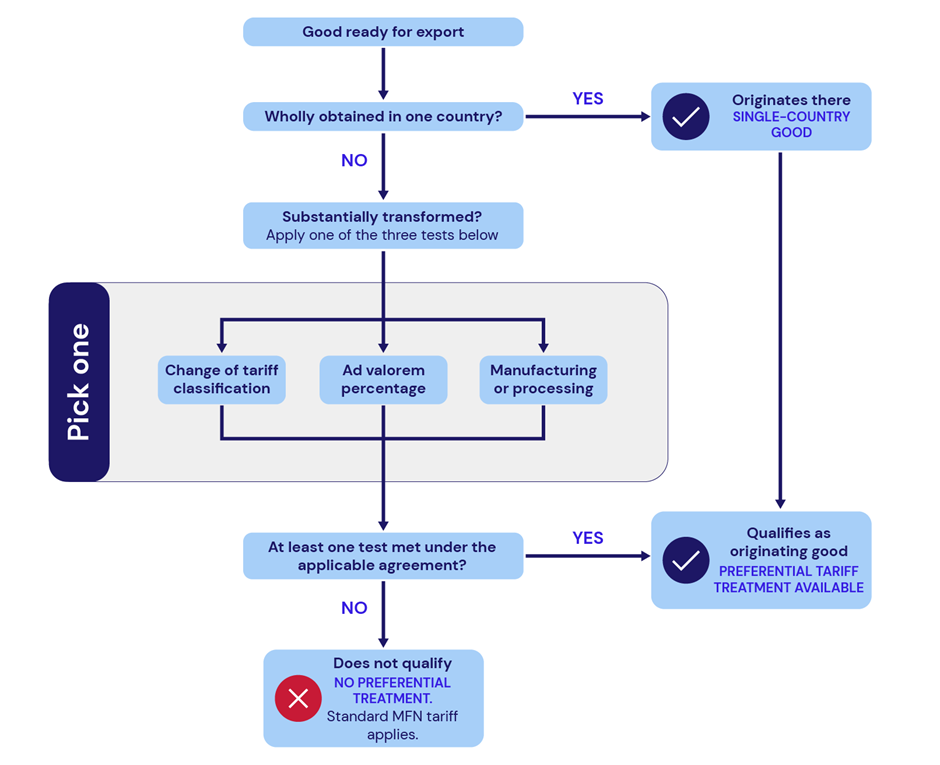
A good is considered wholly obtained if it is entirely produced or manufactured in one country, making that country its origin. When more than one country is involved in production, origin is determined by which country substantially transformed the good. Substantial transformation is established by one of the following methods, or a combination of them:
|
01 Change in tariff heading Substantial transformation occurs if the finished good is classified to a different tariff heading from that of its component materials after production. |
02 Specified process or manufacturing operation An item of goods is transformed if it has undergone the operations of process or manufacture that the rule specifies. |
03 Percentage of value-added The cost of the manufacturing process in the country equals or exceeds a specified percentage of the good’s value. |
|
|
Example: Transformation criteria in the EC The transformation process on non-originating material is a key factor in determining the origin of a product. Further information on determining the rules of origin in the EC is available at EC Taxation and Customs Union Common Provisions. HS transformation is critical in those rules. |
|
Note: Agreements and Rules of Origin Agreements reached outside the GATT/WTO framework will usually establish their own rules for determining origin. The United States-Mexico-Canada Agreement (USMCA) of 2020, for example, between the USA, Canada and Mexico, has extensive origin rules which apply only between the three parties. |